
 By Recharge Info hub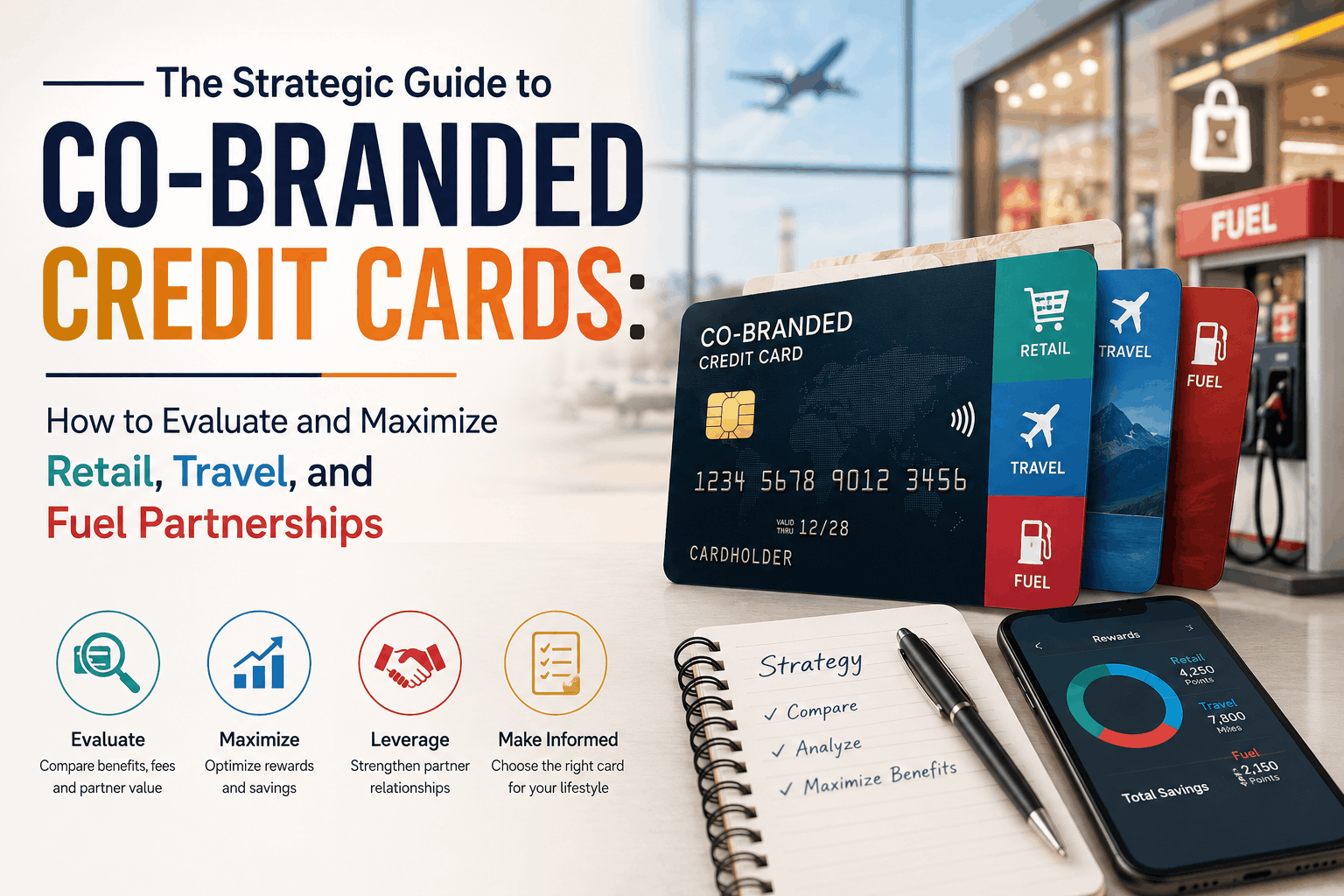
Co-branded credit cards occupy a highly lucrative yet frequently misunderstood niche in the personal finance landscape. Born from strategic alliances between financial institutions and consumer brands, these cards promise accelerated rewards, exclusive perks, and deep loyalty discounts. However, the value proposition of a co-branded card is fundamentally different from a general-purpose rewards card. While a standard cash-back or travel card offers flexible points that can be spent anywhere, a co-branded card locks a portion of your earning potential into a specific merchant ecosystem.
To maximize your return on spend, you must understand the underlying mechanics of these partnerships, evaluate their true financial yield, and strategically integrate them into your broader credit card portfolio. This guide provides a comprehensive framework for evaluating, selecting, and optimizing co-branded credit cards to ensure they deliver genuine value rather than administrative clutter.
How Co-Branded Credit Cards Work: Behind the Partnership
A co-branded credit card is a tripartite agreement involving three distinct entities: the issuing bank (such as Chase, Citi, or ICICI), the payment network (such as Visa, Mastercard, or American Express), and the partner brand (such as an airline, hotel chain, e-commerce giant, or fuel retailer).
In this ecosystem, each player has specific motivations:
- The Partner Brand: Seeks to secure customer loyalty, increase transaction frequency, and capture valuable consumer spending data.
- The Issuing Bank: Aims to acquire highly active credit card users who are already loyal to the partner brand, reducing customer acquisition costs.
- The Payment Network: Facilitates the transaction processing and expands its global merchant footprint.
Because the partner brand co-funds the reward structure, these cards often offer exceptionally high reward rates (typically 3% to 5% or more) when used directly with the partner. However, to offset these generous earnings, the rewards rate for spending outside the partner brand is usually significantly lower than what a dedicated flat-rate rewards card would offer.
Evaluating the Value: When is a Co-Branded Card Worth It?
Before adding a co-branded card to your wallet, you must perform a cold, quantitative analysis of its utility. Because these cards often carry annual fees and restrict your redemption options, they are not universally beneficial. Use the following three-step framework to evaluate their worth.
1. Assess Your Spending Concentration
The primary rule of co-branded cards is simple: the card is only as valuable as your organic affinity for the brand. If you must alter your natural spending habits to justify holding the card, the partnership is working against you. Calculate your annual spend with the partner merchant over the past 12 months. If your organic spending with a specific airline, hotel, or retailer is negligible, the accelerated reward rate will not generate enough value to outweigh the card’s opportunity cost.
2. Calculate the True Value-Per-Point (VPP)
Unlike flat-rate cashback cards where 1 point equals 1 cent, co-branded cards often reward users in proprietary currencies (e.g., frequent flyer miles, hotel loyalty points, or store credits). These currencies do not have a fixed value. For example, a hotel point might be worth 0.5 cents when redeemed for standard stays, while an airline mile might yield 1.8 cents when redeemed for international business class. You must calculate the average VPP based on your typical redemption patterns to determine the true return on your spend.
3. Analyze the Annual Fee vs. Baseline Perks
Many premium co-branded cards carry annual fees. To justify this recurring cost, you must look beyond the welcome bonus. Calculate the value of the card’s static, non-spend-related perks. For instance, if an airline card costs $95 per year but offers free checked bags for you and a companion, and you fly that airline twice a year, the bag-fee savings alone ($120 value) justify the annual fee regardless of how much money you charge to the card.
The Primary Categories of Co-Branded Credit Cards
Travel and Airline Cards
Airline and hotel co-branded cards are among the oldest and most popular partnerships. These cards are highly specialized and are designed to enhance the travel experience rather than act as everyday spending tools. Key benefits often include priority boarding, complimentary checked baggage, airport lounge access, and elite status acceleration. The primary target for these cards is the frequent traveler who consistently patronizes a specific airline alliance or hotel portfolio.
Retail and E-Commerce Cards
Retail partnerships are designed to capture everyday consumer spending. E-commerce giants and major department stores frequently offer co-branded cards that provide flat 5% cashback on all purchases made within their platform. For household items, groceries, and regular retail purchases, these cards can offer unmatched returns. However, they typically feature high variable interest rates (APRs), meaning they should only be used by consumers who pay their statement balances in full every month.
Fuel and Utility Cards
Fuel co-branded cards target commuters by offering direct discounts, surcharge waivers, or accelerated loyalty points at specific gas station chains. While the percentage return can look attractive, the actual dollar savings are often capped monthly or annually. Consumers must weigh whether the marginal savings on fuel justify occupying a slot in their credit portfolio.
The Hidden Pitfalls of Co-Branded Cards
While the benefits can be substantial, co-branded credit cards carry structural risks that savvy consumers must navigate carefully.
- Devaluation Risk: Unlike cash, which retains its nominal value, loyalty points and miles are subject to unilateral devaluation by the partner brand. An airline can change its award chart overnight, making your hard-earned miles worth significantly less.
- The “Opportunity Cost” of Everyday Spend: Using a co-branded card for non-partner purchases (such as using an airline card at a local restaurant for a 1x mile return) is often a poor financial decision. You would yield a higher net return by using a general-purpose card that offers 2% cashback or flexible transferable points.
- Inflexible Redemptions: If you earn points on a specific retail card, those points are typically issued as store certificates that expire within 30 to 90 days, forcing you to make additional purchases to capture the reward.
Strategic Selection Checklist: Before You Apply
To determine if a specific co-branded credit card deserves a place in your wallet, run it through this quick decision checklist:
- Do I spend at least $1,500 annually with this specific partner merchant? (If no, skip the card).
- Does the card offer a waiver on the annual fee for the first year?
- Are the perks “passive” (e.g., free checked bags, automatic elite status) or do they require high spending to unlock?
- Can I get a better yield on my everyday spending using a general-purpose cash-back card?
- What is the historical stability of the partner’s loyalty currency? Have they recently devalued their rewards program?
Frequently Asked Questions
Can I convert co-branded points or miles into cash?
Generally, no. Most co-branded cards require you to redeem rewards within the partner’s ecosystem. While some issuers allow you to redeem store points for statement credits, the redemption rate is usually highly unfavorable compared to redeeming them directly for merchandise, flights, or hotel stays.
What happens to my accumulated rewards if I close the card?
This depends on the type of card. For airline and hotel cards, your points are usually deposited directly into your frequent flyer or loyalty program account with the partner. Closing the credit card will not delete those points, though they remain subject to the partner program’s standard expiration rules. For retail cards, however, the rewards are often managed by the bank; closing the card will typically result in the immediate forfeiture of any unredeemed rewards.
Are co-branded cards harder to get approved for than standard cards?
Approval requirements vary significantly by issuer and card tier. Generally, store-only credit cards (closed-loop cards that can only be used at that specific retailer) have lower credit score requirements and are easier to obtain. Co-branded cards on open networks (Visa/Mastercard) that can be used anywhere typically require a good-to-excellent credit profile, similar to standard rewards cards.
Featured image via Barclaycard — Wikimedia Commons (Public domain).