
 By Recharge Info hub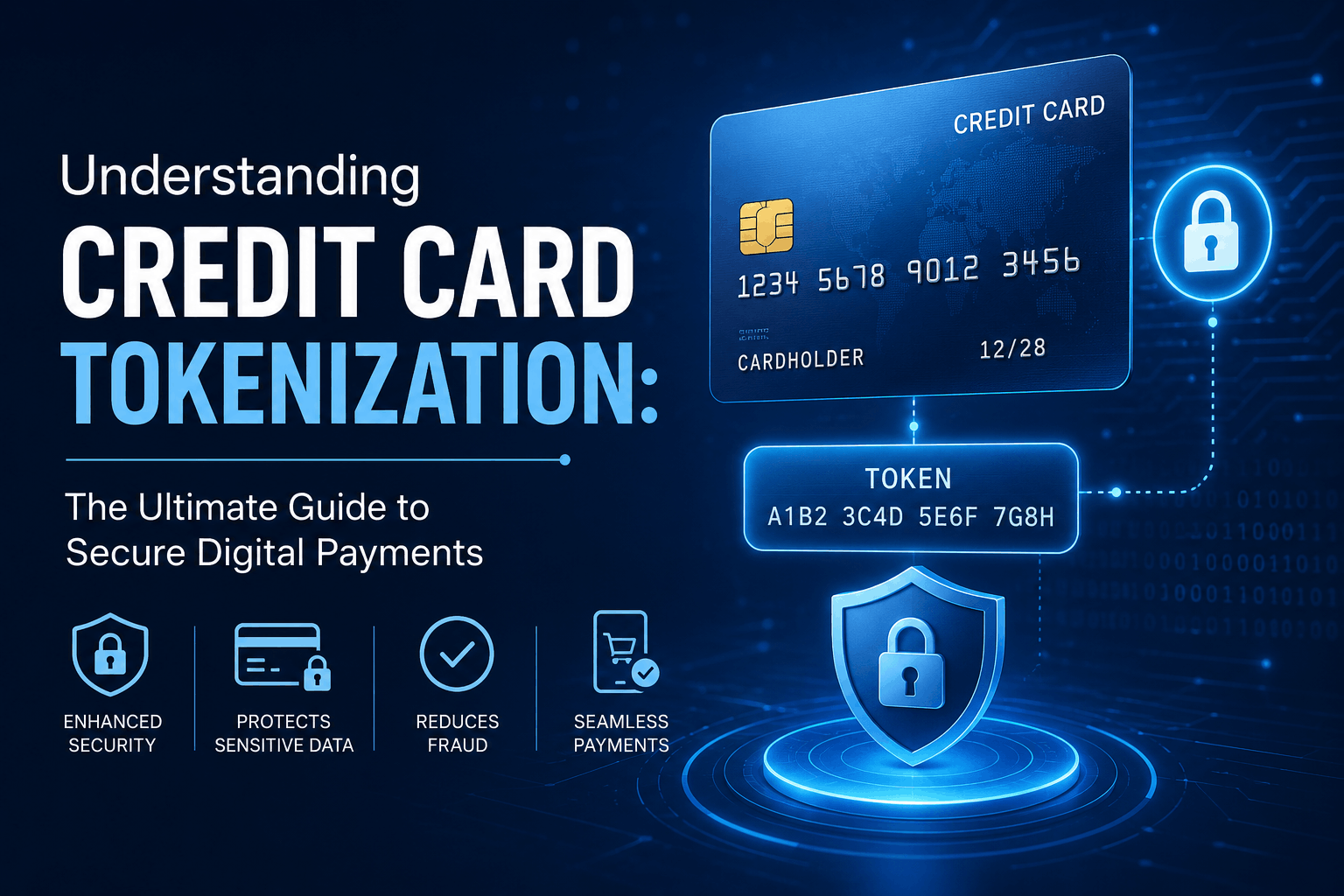
The digital marketplace has revolutionized how we acquire goods and services. From booking flights to ordering daily groceries, credit cards serve as the primary engine driving these digital transactions. However, this convenience comes with inherent risks. Cybercriminals continuously seek ways to intercept financial data, making robust security methods paramount. Enter credit card tokenization—a cutting-edge security technology designed to safeguard sensitive cardholder data during online transactions.
In this comprehensive guide, we will break down what credit card tokenization is, explore the technical mechanics behind how it works, examine its massive benefits for consumers, analyze how regulatory frameworks like India’s Card-on-File Tokenization (CoFT) protect shoppers, and outline actionable security strategies to keep your digital transactions entirely secure.
What is Credit Card Tokenization?
At its core, tokenization is the process of replacing sensitive data with a non-sensitive equivalent, known as a “token.” In the context of credit cards, your sensitive 16-digit Primary Account Number (PAN), expiration date, and CVV are substituted with a randomly generated, unique alphanumeric string. This token acts as a placeholder during the transaction lifecycle.
The Difference Between Encryption and Tokenization
While both encryption and tokenization are used to secure data, they operate on entirely different mathematical principles:
- Encryption: Uses a cryptographic algorithm to scramble data into ciphertext. This ciphertext can be decrypted back into its original form using a mathematical key. If a hacker steals the encrypted data and manages to acquire or crack the key, your original card details are compromised.
- Tokenization: Does not use an algorithmic process to scramble data. Instead, it completely replaces the card details with a random value. There is no mathematical formula that can turn a token back into your actual card number. The relationship between the token and the original card details is stored securely in a centralized, highly protected database called a “token vault,” which is maintained by card networks or major financial institutions.
How Credit Card Tokenization Works Behind the Scenes
To understand the security value of tokenization, it helps to look at what happens behind the scenes during a typical online transaction. When you choose to save your card details on an e-commerce website or a mobile app, the transaction follows a highly secure multi-step sequence:
Step 1: Tokenization Request
When you enter your credit card details on a merchant website and consent to saving the card for future purchases, the merchant initiates a request. Instead of saving your card details on their local servers, the merchant sends the data to their payment gateway, which passes it to the corresponding card network (such as Visa, Mastercard, or RuPay).
Step 2: Token Generation and Vaulting
The card network validates the card details with your issuing bank. Once validated, the card network generates a unique token that is mathematically unrelated to your physical card number. This token is securely mapped to your physical card details inside the card network’s secure token vault. The network then sends this token back to the merchant.
Step 3: Secure Merchant Storage
The merchant receives the token and stores it on their servers. From this point forward, the merchant has no record of your actual 16-digit card number or expiration date. They only possess the token, which is useless to any other merchant or unauthorized third party.
Step 4: Seamless Transaction Authorization
The next time you shop at that merchant, you simply select the saved tokenized card. The merchant sends the token and transaction details through the payment gateway to the card network. The card network decodes the token in its secure vault, retrieves your actual card details, verifies the transaction with your issuing bank, and returns an approval or decline response. This entire process occurs in milliseconds, invisible to the user.
The Key Benefits of Credit Card Tokenization
Tokenization offers a massive upgrade over traditional card-on-file storage methods. By removing actual card data from the e-commerce ecosystem, it addresses several critical vulnerabilities:
1. Protection Against Merchant Data Breaches
Historically, one of the most common ways card details were stolen was through massive data breaches of major retail databases. If a merchant’s server is hacked, cybercriminals can steal thousands of stored card numbers. With tokenization, if a merchant is breached, the hackers only obtain useless tokens. Because these tokens are locked to that specific merchant, they cannot be used to make purchases anywhere else.
2. Domain and Device-Specific Locking
Tokens can be highly customized with specific usage parameters. For example, a token can be restricted to a specific merchant (domain-locked) or a specific mobile phone (device-locked, as seen in Apple Pay or Google Pay digital wallets). If a domain-locked token is somehow intercepted, any attempt to use it on another website or device will be automatically rejected by the card network.
3. Seamless Card Lifecycle Management
When a physical credit card expires or is replaced due to loss, updating your payment details across dozens of subscription services and retail apps can be a tedious chore. With tokenization, the issuing bank can update the underlying card details inside the card network’s token vault without changing the active tokens. This means your recurring subscriptions and saved cards continue to work seamlessly, avoiding service disruptions.
4. Enhanced Mobile Wallet Security
For mobile wallets, tokenization allows your phone to transmit payments near-field communication (NFC) terminals without exposing your actual card details to the merchant’s physical point-of-sale (POS) machine. This virtually eliminates the risk of card skimming at physical retail locations.
The Indian Context: RBI’s Card-on-File Tokenization (CoFT) Mandate
India has emerged as a global leader in payment security, largely driven by forward-thinking policies from the Reserve Bank of India (RBI). To combat the rise of online fraud and secure consumer financial data, the RBI implemented a landmark mandate on Card-on-File Tokenization (CoFT).
What the RBI Mandate Means for Consumers
Under the RBI guidelines, no entity in the card transaction chain—other than the card issuing bank and the card network—is allowed to store actual card data (PAN, expiry date, and CVV). Any previously stored card details on e-commerce websites, food delivery apps, and subscription services had to be purged and replaced with secure tokens.
When shopping on Indian platforms, the tokenization process is straightforward:
- Consenting to Tokenize: When making a payment, you will see an option to “Secure your card as per RBI guidelines” or “Save card for future payments.” Checking this box initiates the tokenization process.
- Two-Factor Authentication: The tokenization process requires validation using a One-Time Password (OTP) sent to your registered mobile number. Once verified, the token is generated and saved.
- Opt-Out Capability: Tokenization is completely voluntary. If you choose not to tokenize your card, you can still complete transactions; however, you will be required to manually input your full 16-digit card number, expiration date, and CVV every single time you make a purchase.
Practical Best Practices for Secure Online Shopping
While tokenization provides an incredibly robust defense against database hacks, it is not a silver bullet. Safeguarding your financial accounts requires a multi-layered approach to security. Follow these practical steps to maximize safety when shopping online:
1. Enable and Monitor Transaction Limits
Most modern credit card issuers allow you to customize your card controls via their mobile banking app. Take advantage of these features by setting daily spending limits for online transactions, disabling international transactions if you do not travel or shop on global sites, and temporarily freezing your card when it is not in use.
2. Use Multi-Factor Authentication (MFA)
Always ensure that Two-Factor Authentication (2FA) or Multi-Factor Authentication is active on your credit card accounts and e-commerce profiles. Even if someone manages to compromise your login credentials, they will not be able to initiate transactions without the physical possession of your mobile device to receive the OTP or biometric verification.
3. Learn to Recognize Phishing Attempts
Tokenization protects you from technical data breaches, but it cannot protect you if you willingly hand over your card details to a fraudulent source. Be highly suspicious of unsolicited emails, text messages, or direct messages on social media containing links that urge you to “verify your account” or “claim a prize.” Always navigate directly to the official website of the merchant or bank rather than clicking on external links.
4. Audit and Purge Your Saved Tokens
Over time, you may accumulate dozens of saved cards across various niche e-commerce platforms. Periodically audit your active tokens. Most major banks now offer a dedicated section within their net banking portals or mobile apps where you can view all active tokens linked to your credit cards and revoke access for merchants you no longer use.
Frequently Asked Questions (FAQ)
Is there a fee for tokenizing my credit card?
No. Tokenization is a security service provided free of charge by card networks, issuing banks, and merchants. It is designed to encourage safer digital transactions without adding any financial burden to consumers.
Does tokenization affect my ability to earn reward points or cashbacks?
Not at all. Because the token is directly mapped back to your physical card account in the card network’s secure vault, you will continue to receive all eligible reward points, cashbacks, co-branded benefits, and milestone perks just as you would with a traditional transaction.
What happens to my tokens if I lose my physical credit card?
If your physical card is lost or stolen and you request a replacement, your bank will issue a new card with a new 16-digit PAN. Depending on your bank’s integration, some tokens may automatically link to your new card, while others may be deactivated for safety, requiring you to re-tokenize on your favorite merchant platforms.
Can a single token be used across different websites?
No. Tokens are unique to the combination of the card, the specific merchant, and the device used. A token generated for one e-commerce store cannot be used to authorize transactions at any other e-commerce store, ensuring that a breach at one merchant has zero impact on your security elsewhere.
Your Secure Online Shopping Checklist
To ensure your next online shopping experience is as secure as possible, use this quick checklist before checking out:
- Verify the website URL starts with “https://” and displays a padlock symbol in the browser bar.
- Choose to tokenize your credit card at checkout rather than entering it as a one-time guest card if you plan to use the merchant again.
- Confirm that your card issuer’s app has active push notifications turned on for real-time transaction alerts.
- Keep your mobile device’s operating system and shopping applications updated to the latest versions to patch security vulnerabilities.
Featured image via victor vic — Wikimedia Commons (CC BY-SA 2.0).