
 By Recharge Info hub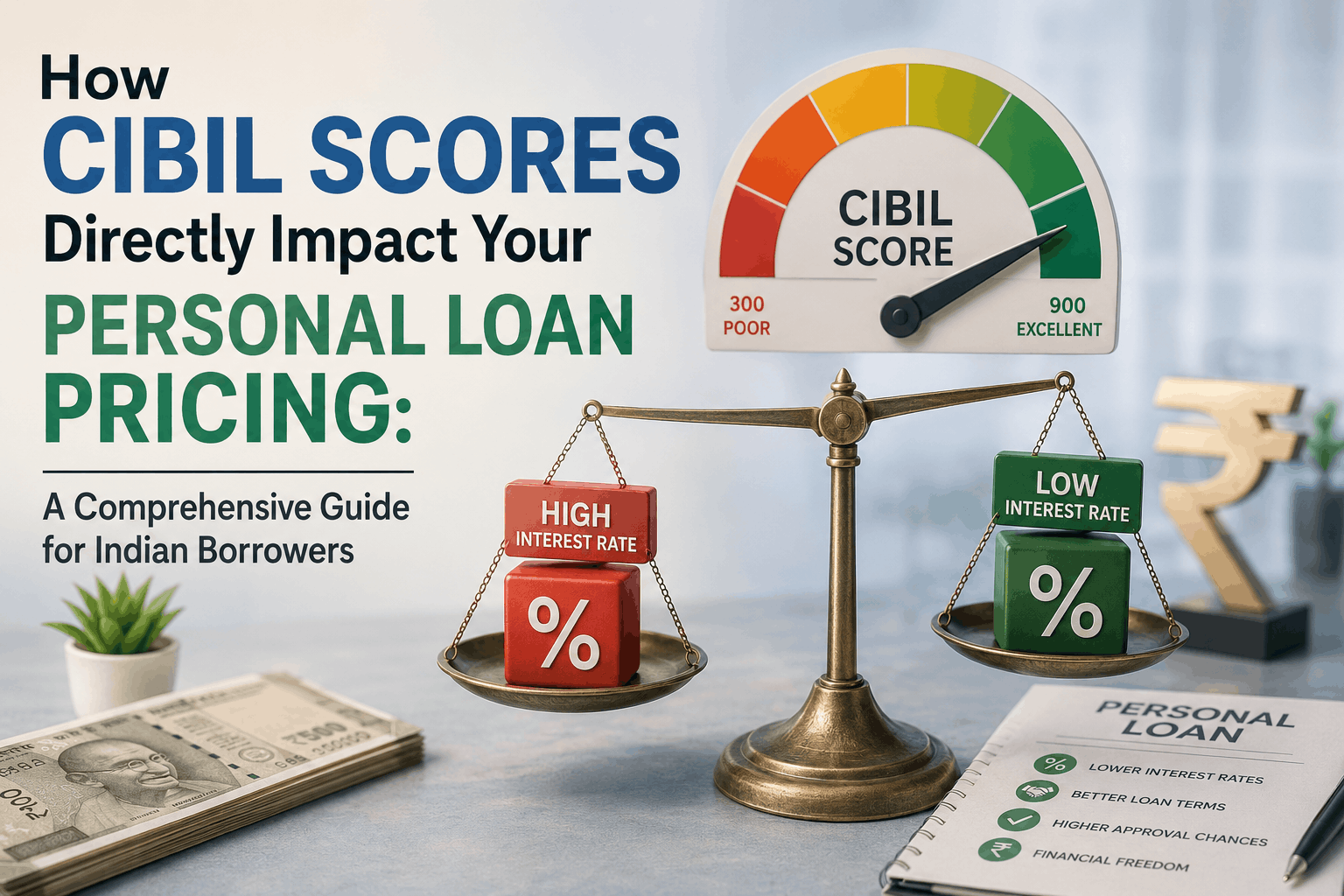
In the Indian financial ecosystem, personal loans serve as a vital safety net and a flexible funding tool for diverse needs, ranging from medical emergencies and home renovations to wedding expenses and debt consolidation. Because personal loans are unsecured—meaning they do not require collateral like gold, property, or securities—lenders must rely on alternative methods to assess a borrower’s creditworthiness. This is where the Credit Information Bureau (India) Limited, or CIBIL, plays a defining role.
Your CIBIL score is essentially a three-digit summary of your entire credit history, representing how responsibly you have managed debt in the past. For financial institutions, this score is the primary filter used to determine not only your eligibility for a personal loan but also the pricing of the loan. A higher score translates to a lower risk profile, allowing borrowers to leverage their creditworthiness for highly competitive interest rates. Conversely, a poor score can lead to high interest rates or outright rejection. Understanding the mechanics of the CIBIL score and its direct impact on personal loan pricing is crucial for anyone looking to secure affordable financing in India.
The Anatomy of a CIBIL Score: How It Is Calculated
Before diving into how your score influences loan pricing, it is essential to understand what constitutes this crucial number. A CIBIL score ranges from 300 to 900, with scores closer to 900 indicating superior credit health. The calculation is based on several key parameters, each carrying a specific weight:
1. Payment History (35% Weight)
Your track record of timely payments is the single most critical factor. Lenders look at whether you have paid your previous credit card bills and loan EMIs on time. Even a single delayed payment or a default can significantly drag down your score, as it signals a lack of financial discipline or repayment capacity.
2. Credit Utilization Ratio (30% Weight)
This ratio measures how much credit you are using compared to your total available credit limit across all credit cards. For instance, if your total credit limit is INR 1,00,000 and your outstanding balance is INR 30,000, your credit utilization ratio is 30%. Maintaining a ratio below 30% indicates that you are not overly dependent on credit, which positively impacts your score.</p
3. Credit Mix and Duration (25% Weight)
Lenders prefer to see a balanced mix of secured loans (such as home or auto loans) and unsecured loans (such as personal loans or credit cards). A history of successfully managing different types of credit demonstrates versatility. Additionally, a longer credit history provides a deeper pool of data, allowing lenders to make more accurate risk assessments.
4. Recent Credit Inquiries (10% Weight)
Every time you apply for a loan or credit card, the lender makes a ‘hard inquiry’ to check your credit report. Making multiple credit applications in a short span can portray you as ‘credit-hungry,’ which negatively impacts your score. Soft inquiries, such as checking your own score, do not affect your credit rating.
The Direct Link Between CIBIL Scores and Personal Loan Interest Rates
In India, banks and Non-Banking Financial Companies (NBFCs) utilize risk-based pricing models. This means the interest rate offered to you is directly proportional to the risk the lender perceives in lending to you. A stellar CIBIL score acts as a powerful negotiating tool, unlocking the lowest possible rates. Below is a breakdown of how different score brackets typically influence personal loan terms:
| CIBIL Score Range | Risk Category | Impact on Personal Loan Pricing and Approval |
|---|---|---|
| 750 to 900 | Excellent / Low Risk | Eligible for the lowest interest rates, pre-approved offers, quick processing, waiver of processing fees, and higher loan amounts. |
| 700 to 749 | Good / Moderate Risk | Highly likely to get approved, competitive interest rates, standard processing, and moderate room for negotiation. |
| 650 to 699 | Fair / Average Risk | Approval is possible but often comes with higher interest rates, stricter documentation requirements, and potentially lower loan amounts. |
| Below 650 | Poor / High Risk | High risk of loan rejection. If approved by niche NBFCs, interest rates will be exceptionally high, often accompanied by strict terms. |
While the exact interest rates vary across providers and locations, borrowers with scores above 750 generally secure rates that are several percentage points lower than those with scores in the fair or poor ranges. Over a typical repayment tenure of three to five years, this difference in interest rates can translate into thousands of rupees saved on EMI payments.
Beyond Interest Rates: Other Loan Terms Influenced by Your CIBIL Score
While the interest rate is the most visible cost of a personal loan, your CIBIL score also exerts substantial influence over several other critical aspects of your loan agreement:
1. Loan Quantum (Sanctioned Amount)
Lenders are more comfortable approving larger loan amounts for borrowers who have demonstrated exemplary credit behavior. If your score is outstanding, a bank may willingly approve a personal loan of INR 15 Lakhs or more, provided your income supports it. For lower scores, lenders will often cap the sanctioned amount to mitigate their exposure to default risk.
2. Repayment Tenure Flexibility
A high CIBIL score gives you the leverage to choose a repayment tenure that aligns with your cash flow, whether that is a short 12-month tenure to minimize interest outgo or a longer 60-month tenure to keep EMIs manageable. For riskier profiles, lenders may restrict the tenure options to ensure rapid recovery of the principal amount.
3. Processing Fees and Documentation
Borrowers with excellent credit scores are often offered promotional deals, including complete waivers or steep discounts on loan processing fees. Additionally, because their credit history is clean and thoroughly documented in the CIBIL database, the verification process is streamlined, requiring minimal paperwork and leading to rapid, sometimes instant, disbursal.
Strategic Roadmap to Improve Your CIBIL Score Before Applying
If you are planning to apply for a personal loan in the near future and find that your credit score is less than ideal, taking proactive steps to rebuild it can yield substantial financial benefits. Because credit scores are dynamic and updated monthly, disciplined financial habits can lead to noticeable improvements over a six-to-twelve-month period:
- Review Your Credit Report for Errors: Regularly download your official CIBIL report to check for discrepancies, such as incorrectly reported late payments, active accounts that you have already closed, or administrative errors in your personal details. You can file a dispute directly through the official CIBIL website to resolve these errors.
- Automate Your Debt Obligations: Set up standing instructions or auto-debit facilities on your bank accounts to ensure that all credit card bills and existing EMIs are paid on or before their due dates. Consistent, timely payments are the fastest way to repair a damaged credit score.
- Optimize Your Credit Card Usage: If you routinely exhaust your credit card limits, consider paying off balances mid-cycle or requesting a credit limit increase from your issuer (without increasing your actual spending) to naturally lower your credit utilization ratio.
- Avoid Excessive Loan Inquiries: Refrain from submitting multiple loan applications to different lenders simultaneously. Instead, research and compare loan products online using third-party comparison tools, which perform soft inquiries, and only submit a formal application once you have selected your preferred lender.
- Maintain Older Accounts: The length of your credit history matters. Avoid closing old credit card accounts that you have managed responsibly, as they contribute positively to the average age of your credit profile.
Actionable Checklist for Personal Loan Applicants in India
Before submitting your next personal loan application, go through this quick check to ensure you are positioned to get the best possible terms:
- Check your current CIBIL score and download your full credit report.
- Verify that your Fixed Obligation to Income Ratio (FOIR) is below 50% (meaning your total monthly debt commitments, including the proposed loan EMI, do not exceed half of your monthly net income).
- Gather all necessary documentation, including PAN card, Aadhaar card, salary slips for the last three months, and bank statements for the last six months.
- Compare processing fees, foreclosure charges, and prepayment penalties across at least three different lenders.
- Ensure that your employment status is stable, as lenders favor applicants with continuous employment of at least one to two years with reputable employers.
Frequently Asked Questions
Does checking my own CIBIL score reduce it?
No. When you check your own CIBIL score through official channels or authorized financial platforms, it is classified as a ‘soft inquiry’ and has absolutely no impact on your credit score. Hard inquiries only occur when a financial institution checks your credit report in response to a formal loan or credit card application.
Can I get a personal loan with a CIBIL score of 600?
Yes, obtaining a personal loan with a score of 600 is possible, but it is challenging and highly expensive. You may need to approach specialized NBFCs or peer-to-peer lending platforms, which typically charge significantly higher interest rates and may require a co-applicant or guarantor to secure the loan.
How long does it take for a CIBIL score to improve?
Rebuilding a credit score is a gradual process. While minor corrections (such as fixing a reporting error) can reflect within 30 to 45 days, recovering from a history of late payments or defaults typically requires six to twelve months of consistent, disciplined financial behavior to demonstrate a sustained trend of low risk.
What is the difference between a CIBIL score and other credit scores in India?
While CIBIL is the oldest and most widely recognized credit bureau in India, there are other RBI-licensed bureaus such as Experian, Equifax, and CRIF High Mark. While the scoring algorithms and ranges differ slightly among these bureaus, they all assess similar financial parameters. Most major Indian lenders prioritize the CIBIL score for personal loan evaluations.
Disclaimer: Personal loan terms, eligibility requirements, interest rates, and processing fees vary significantly by lender, financial institution, and the applicant’s location. The information provided in this guide is for educational purposes and should not be construed as direct financial advice. Borrowers should thoroughly review the terms and conditions offered by their chosen provider before signing any loan agreement.
Featured image via Zapmoney — Wikimedia Commons (CC BY-SA 4.0).