
 By Recharge Info hub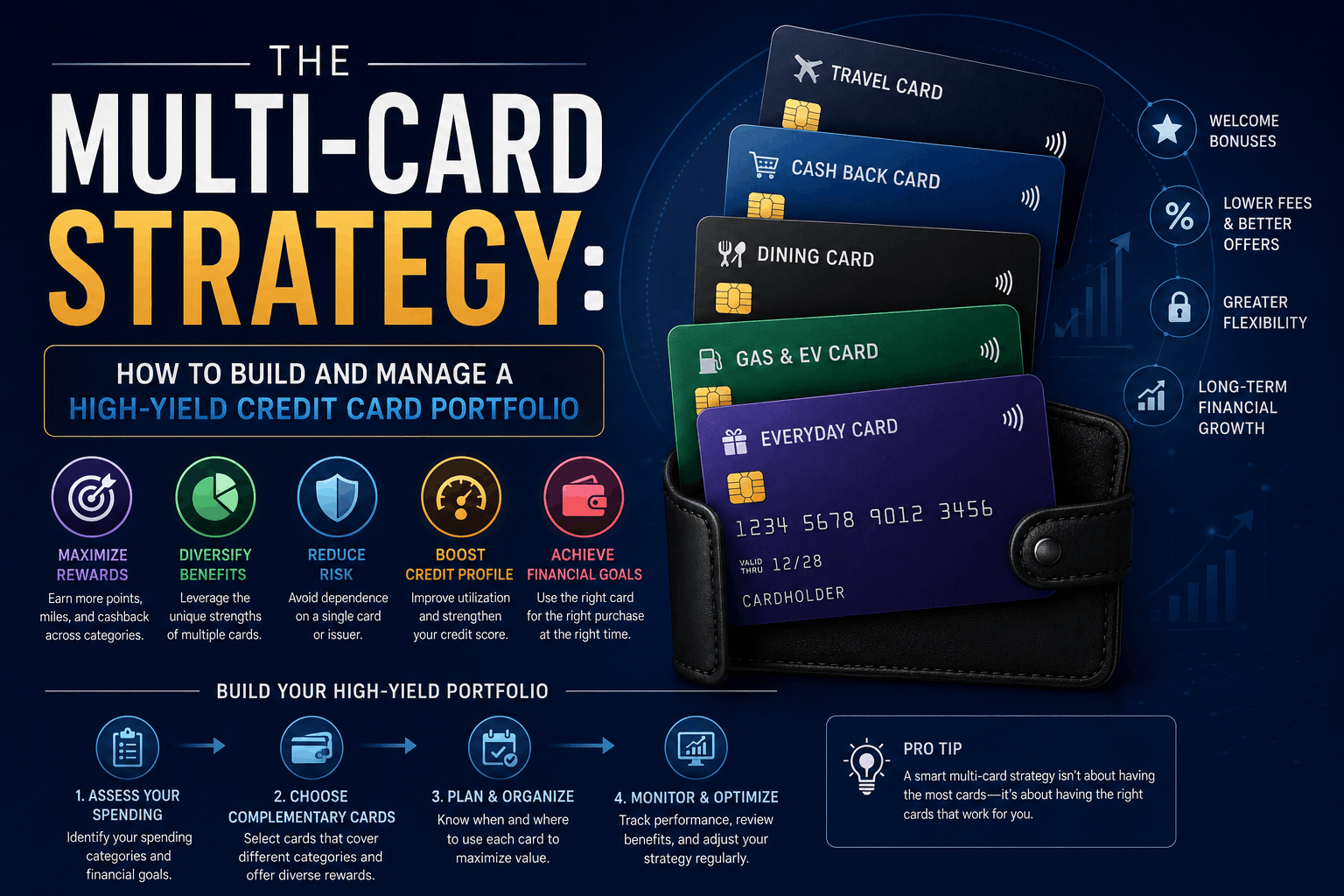
In the modern financial landscape, relying on a single credit card is often a missed opportunity. While a single card offers simplicity, it rarely provides optimal rewards across all spending categories. Consumers who want to maximize their cash back, travel points, and consumer protections often turn to a multi-card strategy. By strategically combining different credit cards, you can ensure that every dollar spent earns the maximum possible return.
However, managing a portfolio of multiple credit cards requires discipline, organization, and a clear understanding of how credit card issuers structure their rewards programs. Without a systematic approach, you risk accumulating high annual fees, missing payment due dates, or damaging your credit score. This comprehensive guide details how to build, manage, and optimize a high-yield credit card portfolio tailored to your unique spending habits.
Understanding the Multi-Card Strategy
A multi-card strategy involves using different credit cards for specific types of purchases to exploit the tiered rewards structures offered by issuers. Instead of earning a flat 1% or 1.5% cash back on all purchases, a strategic cardholder might use one card for 5% back on groceries, another for 3% back on dining, and a third for 2% back on all other everyday spending.
Why One Credit Card Is Rarely Enough
Credit card issuers design their products with specific target audiences and spending behaviors in mind. A card that offers exceptional rewards on airfare and hotel stays may offer very poor returns on supermarket purchases or utility bills. Conversely, a card optimized for gas station purchases may lack robust travel insurance protections or airport lounge access. By diversifying your card portfolio, you can capture the highest tier of rewards in each spending category while enjoying a wider array of ancillary benefits, such as extended warranties, purchase protection, and travel credits.
The Core Pillars of a Diversified Portfolio
A well-balanced credit card portfolio generally rests on three core pillars:
- The Anchor Card: A flat-rate reward card used for general purchases that do not fall into high-yielding bonus categories. This card acts as your baseline, ensuring you always earn a strong return (typically 1.5% to 2% cash back) on everyday expenses.
- Category-Specific Cards: Cards that offer elevated multipliers (such as 3x, 4x, or 5x points) on high-volume spending categories like dining, groceries, gas, or streaming services. These cards are highly targeted and should align directly with your largest monthly expenses.
- Co-Branded and Premium Travel Cards: Cards tied to specific airlines, hotels, or premium travel networks that offer high-value perks, transfer partnerships, and luxury travel benefits. These cards often come with annual fees but provide outsized value to frequent travelers.
Step 1: Evaluating Your Spending Patterns
Before applying for new credit cards, you must conduct a thorough audit of your personal or business expenses. Credit card optimization is only effective when it aligns with your natural spending habits. Attempting to alter your spending to justify a card’s annual fee often leads to unnecessary expenses and financial strain.
Category Mapping: Dining, Travel, Groceries, and Utilities
Begin by reviewing your bank and credit card statements from the past three to six months. Categorize your expenses into distinct buckets: groceries, dining out (including food delivery), travel (flights, hotels, transit), gas, utilities, and retail shopping. Calculate the average monthly and annual spend in each category. This quantitative data will highlight where your money actually goes, allowing you to select cards that offer the highest rewards precisely where you spend the most.
Analyzing Merchant Category Codes (MCCs)
It is crucial to understand that credit card rewards are determined by Merchant Category Codes (MCCs). These are four-digit numbers assigned to a merchant by payment networks (such as Visa, Mastercard, or American Express) based on the primary line of business. For example, a supermarket that contains a small cafe might code entirely as “Grocery Store,” meaning a dining-specific card will not yield bonus points there. Conversely, buying groceries at a superstore or wholesale club often does not trigger grocery rewards because those merchants are classified under different MCCs. Understanding these distinctions prevents disappointment when rewards are posted to your account.
Step 2: Selecting Cards to Fill Key Niches
Once you have mapped your spending, you can begin selecting cards to construct your portfolio. A balanced portfolio typically consists of three to five cards, though advanced users may hold more. The goal is to cover your major spending categories while minimizing overlapping annual fees.
The Flat-Rate ‘Catch-All’ Card
The foundation of any multi-card system is the “catch-all” card. This card is used for any transaction that does not qualify for a higher category bonus. Ideally, this card should offer at least 1.5% to 2% cash back, or 1.5 to 2 points per dollar spent, with no annual fee. Using this card ensures that you never settle for the standard 1% baseline return on miscellaneous expenses like auto repairs, medical bills, or home maintenance.
Analyzing Sign-Up Bonuses and Welcome Offers
When selecting new cards, pay close attention to introductory sign-up bonuses. These welcome offers are the fastest way to accumulate large point balances. However, ensure that you can meet the minimum spending requirements naturally within the specified timeframe (usually three months) without overspending. If a card requires you to spend $4,000 in three months, make sure your regular expenses easily cover this amount.
The Math Behind Annual Fees: When to Pay and When to Avoid
Many of the best rewards cards charge an annual fee, ranging from $95 to $695 or more. To determine if an annual fee is worth paying, calculate the card’s net value. Subtract the annual fee from the total value of the rewards and credits you expect to use. For example, a travel card with a $250 annual fee that provides a $200 annual travel credit and a $100 hotel credit effectively pays you $50 to keep it in your wallet, provided you would have spent money on those travel services anyway.
Step 3: Managing the Logistics of Multiple Cards
Operating a multi-card system requires meticulous organizational habits. Mismanaging payments or failing to monitor your accounts can lead to late fees, interest charges, and credit score damage that quickly erases any rewards you have earned.
Organizing Due Dates and Statement Cycles
When you hold multiple cards, keeping track of different payment due dates can be challenging. To simplify this, contact your card issuers to align your statement closing dates and payment due dates. Most issuers allow you to choose your monthly due date online or over the phone. Aligning all your cards to due dates within the same three-day window makes it much easier to review and pay your bills in a single monthly session.
Automating Payments Safely
To guarantee you never miss a payment, set up automatic payments (autopay) for at least the “Minimum Payment Due” or, preferably, the “Statement Balance” on every card. Even if you prefer to review your bills and pay them manually, having autopay active serves as a safety net against unexpected delays or forgetfulness. Always ensure that your linked checking account has sufficient funds to cover these automated withdrawals to avoid overdraft fees.
Monitoring Credit Utilization and Credit Scores
Holding multiple credit cards can actually benefit your credit score by increasing your total available credit, which naturally lowers your overall credit utilization ratio. However, you must monitor individual card utilization as well. If you charge a large expense to a single card with a low credit limit, that specific card’s high utilization can temporarily lower your credit score, even if your overall utilization remains low. Try to keep your utilization on each individual card below 30%, and ideally below 10%, for optimal credit health.
Step 4: Optimizing Rewards Redemption
Earning points is only half the battle; maximizing their value during redemption is where the true value of a multi-card strategy is unlocked. Different rewards currencies have vastly different values depending on how they are redeemed.
Points Pooling and Transfer Partners
Many major card issuers offer “ecosystems” where points earned across different cards can be pooled into a single account. For example, you might earn points on a no-fee cash back card and transfer them to a premium travel card within the same issuer’s family. Once pooled, these points can often be transferred to partner airline and hotel loyalty programs at a 1:1 ratio. Transferring points to partners frequently yields far greater value than redeeming them for cash back, gift cards, or statement credits.
Avoiding Common Redemption Pitfalls
To get the most out of your hard-earned rewards, avoid these common redemption mistakes:
- Redeeming for Merchandise: Using points to buy electronics, housewares, or apparel directly from an issuer’s catalog almost always yields a poor redemption rate (often less than 0.5 cents per point).
- Letting Points Expire: While many modern credit card points do not expire as long as your account remains open and active, some co-branded hotel and airline miles do expire after periods of inactivity.
- Hoarding Points: Points do not earn interest and are subject to devaluation when loyalty programs update their reward charts. It is generally best to earn and burn your points within a 12- to 18-month window.
Decision Checklist: Evaluating Your Card Portfolio
Use this quick decision checklist annually to determine if your current multi-card strategy remains effective and cost-efficient:
- Fee vs. Value Check: Did the monetary value of the rewards and perks you received from each annual-fee card exceed the cost of the fee itself?
- Spend Alignment: Are your highest-spending categories still matched with your highest-earning cards?
- Redemption Review: Have you successfully redeemed your accumulated points, or are you sitting on a large, stagnant balance?
- Credit Health: Is your overall credit score stable or improving under your current card management routine?
Frequently Asked Questions (FAQ)
Does having multiple credit cards hurt my credit score?
Not inherently. Opening a new card causes a temporary, minor dip in your credit score due to the hard inquiry. However, in the long term, having multiple cards increases your total available credit limit and can lower your overall credit utilization ratio, which is highly beneficial for your score. The key is to manage all accounts responsibly by paying balances in full and on time.
How many credit cards should the average consumer hold?
There is no single correct number. For most consumers, a portfolio of two to four cards strikes the perfect balance between maximizing rewards and keeping management simple. Holding more than five cards requires advanced tracking tools and strict organizational habits.
How do I decide when to close a credit card?
If a card has an annual fee that you can no longer justify through rewards or perks, it may be time to close it or request a product downgrade to a no-fee version. Before closing a card, consider the impact on your average age of accounts and total credit limit. If you decide to close it, make sure to pay off the balance entirely and redeem any remaining rewards first.
What is the best way to track multiple reward currencies?
Many cardholders use specialized financial tracking apps or simple spreadsheets to monitor their balances, statement cycles, and rewards programs. Regularly logging into your issuer portals or using a unified dashboard can help you keep track of point expiration dates and pending rewards.
Disclaimer: Credit card terms, interest rates, rewards structures, annual fees, and eligibility requirements vary significantly by card issuer, financial institution, and geographical location. Always read the specific terms and conditions provided by the issuer before applying for any credit product.
Featured image via Multicherry — Wikimedia Commons (CC BY-SA 4.0).