
 By Recharge Info hub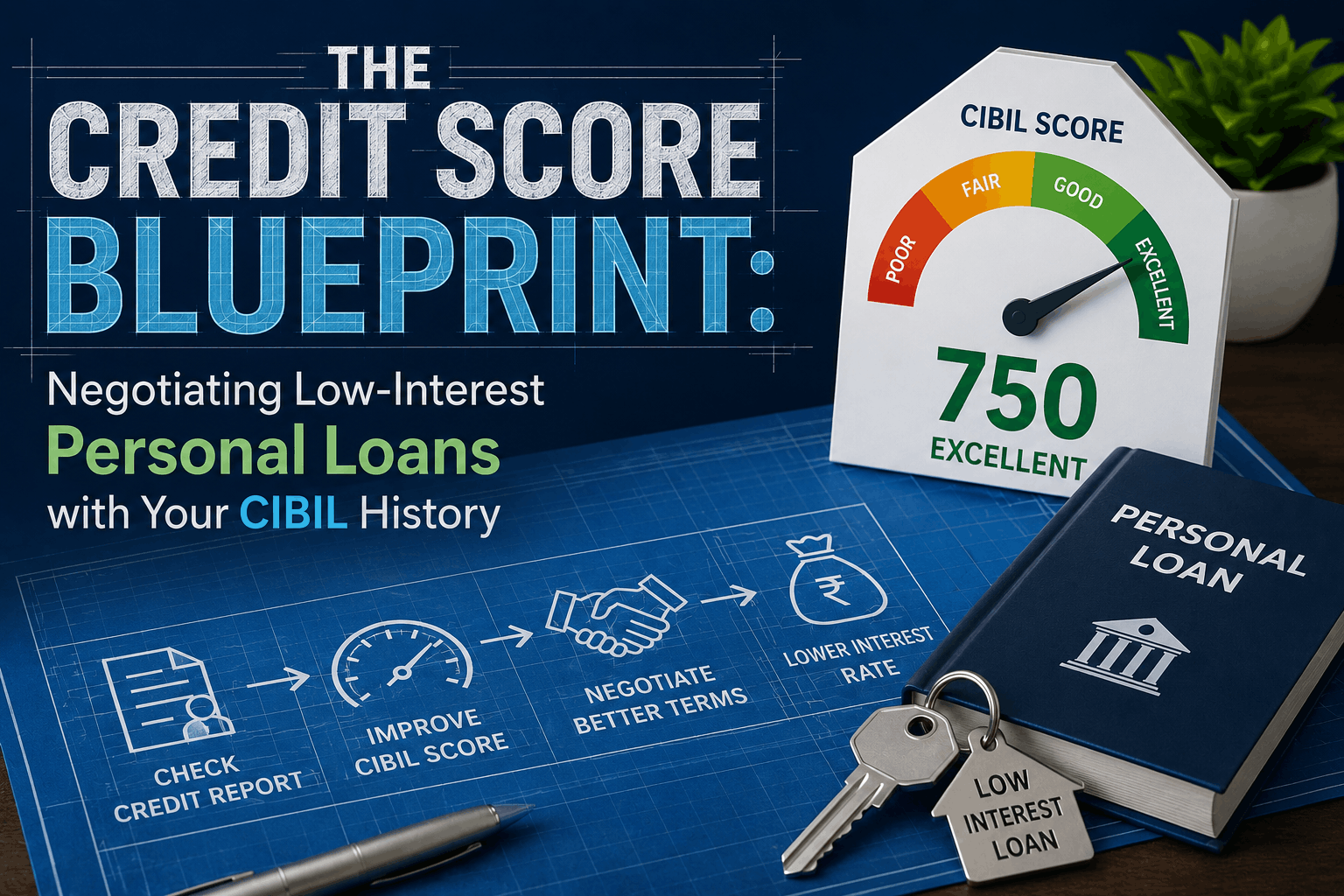
In the Indian retail credit ecosystem, securing a personal loan is one of the most common methods for managing unexpected financial requirements, consolidations, or major life milestones. Because personal loans are unsecured—meaning they do not require collateral like property, gold, or securities—lenders bear a higher level of risk. To mitigate this risk, financial institutions rely heavily on credit bureaus to evaluate a borrower’s creditworthiness. Among these, the TransUnion CIBIL score is the most widely recognized and influential benchmark.
Understanding the intricate relationship between your CIBIL score and the interest rates offered by banks and Non-Banking Financial Companies (NBFCs) is crucial. A high credit score does not just guarantee loan approval; it serves as a powerful negotiating tool that can save you thousands of rupees over your loan tenure. This guide provides an in-depth analysis of how your CIBIL score influences personal loan pricing, how lenders interpret your credit profile, and how you can systematically optimize your score to secure the most competitive interest rates in India.
Understanding the CIBIL Score Spectrum for Personal Loans
Your CIBIL score is a three-digit numerical summary of your credit history, ranging from 300 to 900. Derived from the information compiled in your Credit Information Report (CIR), this score reflects your historical repayment behavior, credit mix, credit exposure, and overall financial discipline. Lenders categorize these scores into distinct brackets, each representing a different level of risk and, consequently, different pricing tiers for personal loans.
The Score Brackets and Their Lending Implications
- Excellent (750 – 900): Borrowers in this range represent the lowest risk to lenders. If your score is 750 or above, you are in a prime position. Lenders will actively compete for your business, offering the lowest available interest rates, waived or reduced processing fees, quicker approval times, and flexible repayment tenures.
- Good (700 – 749): This is a highly respectable range. While you will likely secure approval without difficulty, you may have slightly less leverage to negotiate the absolute lowest rates. However, with a strong income profile, you can still secure highly competitive offers.
- Average (650 – 699): Borrowers in this bracket are viewed with moderate caution. While personal loans are still accessible, lenders may apply stricter scrutiny to your income stability, employment history, and debt-to-income ratio. The interest rates offered to this bracket are typically higher than those offered to prime borrowers.
- Poor (Below 650): A score below 650 indicates a history of missed payments, defaults, or high credit utilization. Securing an unsecured personal loan in this range is challenging. If approved, the loan will likely carry high interest rates to offset the lender’s risk, or require a co-applicant or guarantor.
Why Your CIBIL Score Directly Dictates Personal Loan Rates
To understand why a CIBIL score has such a profound impact on your personal loan pricing, it is necessary to look at the underwriting process from the lender’s perspective. In unsecured lending, the lender has no physical asset to seize in the event of a default. Therefore, the pricing of the loan—specifically the interest rate—is directly correlated to the probability of default.
Risk-Based Pricing Models
Most modern Indian banks and NBFCs utilize risk-based pricing models. Under these models, interest rates are not uniform; instead, they are customized based on the applicant’s risk profile. A borrower with a CIBIL score of 800 might be offered a personal loan at a 10.5% annual interest rate, while an applicant with a score of 680 might be offered the exact same loan amount at 15.5% or higher. Over a five-year tenure on a substantial loan, this percentage gap translates into a significant financial difference in total interest paid.
Impact on Processing Fees and Charges
The influence of your CIBIL score extends beyond the nominal interest rate. Lenders often adjust administrative and processing fees based on your credit score. Prime borrowers with excellent credit histories are frequently offered complete waivers on processing fees during festive seasons or promotional campaigns, whereas higher-risk borrowers are charged standard fees, which typically range from 1% to 3% of the total loan amount.
Key Components of a CIBIL Report That Influence Lenders
While the three-digit score is the primary filter, lenders also conduct a granular analysis of your complete CIBIL report. Understanding the components that make up this report can help you identify specific areas that require improvement before you initiate a personal loan application.
| CIBIL Component | Approximate Impact Weight | Key Focus Areas for Lenders |
|---|---|---|
| Payment History | 35% | Timely payments of credit card bills and loan EMIs; presence of any late payments or written-off accounts. |
| Credit Utilization Ratio | 30% | The proportion of available revolving credit (credit cards) actively being used. |
| Credit History Duration | 15% | The age of your oldest active credit account and the average age of your overall credit portfolio. |
| Credit Mix | 10% | The balance between secured loans (home, auto) and unsecured credit (personal loans, credit cards). |
| Recent Credit Inquiries | 10% | The frequency of hard credit inquiries initiated by lenders in response to your applications. |
1. Payment History (35% Weight)
This is the single most critical element. Even a single missed EMI or delayed credit card payment within the last 12 to 24 months can negatively impact your score. Lenders look for a clean record of consistent, on-time payments. Any status indicating “Settled,” “Written Off,” or “Post-Write-Off Settled” on past accounts is a major red flag that suggests past defaults, making lenders highly hesitant to extend unsecured credit.
2. Credit Utilization Ratio (30% Weight)
The Credit Utilization Ratio (CUR) measures how much of your total available credit card limit you are using. For example, if you have a total credit limit of ’1,00,000 across all your cards and you routinely carry a balance of ’80,000, your CUR is 80%. Lenders view a high CUR (typically above 30%) as an indicator of credit hunger and financial strain, which can depress your CIBIL score even if you make your payments on time.
3. Credit Mix and Inquiries (20% Combined Weight)
Lenders prefer to see a healthy mix of secured and unsecured credit. A portfolio consisting solely of multiple personal loans and credit cards can indicate higher risk than one that includes structured, secured loans like a home or car loan. Furthermore, making multiple personal loan applications within a short timeframe triggers multiple “hard inquiries” on your report, which temporarily lowers your score and signals to lenders that you may be in an urgent financial bind.
Step-by-Step Strategy to Optimize Your CIBIL Score Before Applying
If you plan to apply for a personal loan in the next six to twelve months, taking proactive steps to optimize your credit score can yield substantial savings. Here is a systematic blueprint to improve your CIBIL profile:
Step 1: Obtain and Audit Your Free Annual Credit Report
Under Reserve Bank of India (RBI) mandates, every citizen is entitled to one free credit report check per year from each of the major credit bureaus, including TransUnion CIBIL. Download your report and carefully review it for inaccuracies. Look for misspelled names, incorrect account statuses (such as a closed loan still showing as active), or unauthorized accounts that you did not open. If you find errors, file a dispute immediately through the CIBIL online dispute resolution portal.
Step 2: Implement the 30% Credit Utilization Rule
Pay down your outstanding credit card balances to bring your utilization below 30% on each individual card. If you cannot pay down the balances immediately, you can request your credit card provider to increase your credit limit based on salary hikes, which will automatically lower your utilization ratio, provided you do not increase your spending.
Step 3: Clear All Outstanding Dues and Avoid “Settlements”
If you have any past-due accounts, work with the respective lenders to pay them off in full. Avoid opting for a “settlement” where the lender agrees to accept a lower amount and forgive the rest. While a settlement resolves the debt, it leaves a permanent “Settled” status on your CIBIL report, which severely damages your creditworthiness for years. Aim for a status of “Closed” or “No Dues Outstanding.”
Step 4: Establish a Consistent Payment Calendar
Set up standing instructions or auto-debit facilities on your primary bank account for all active EMIs and credit card minimum payments. Consistency over a continuous six-month period is often enough to demonstrate a positive trend to algorithmic underwriting systems.
How to Leverage a High CIBIL Score to Negotiate Better Loan Terms
Once you have achieved a CIBIL score of 750 or above, you should not simply accept the first personal loan offer presented to you. Instead, use your strong credit standing as leverage to negotiate favorable terms. Here is how to approach the negotiation process:
1. Leverage Pre-Approved Offers
Check your existing net banking portals. Banks where you maintain a salary account, savings account, or active fixed deposits often extend pre-approved personal loan offers to high-CIBIL customers. These offers generally feature competitive interest rates, minimal documentation, and rapid processing. Use these pre-approved offers as a baseline when comparing rates with other lenders.
2. Highlight Your Relationship Banking History
If you have been a loyal customer of a particular bank for several years, schedule a discussion with your relationship manager. Emphasize your high CIBIL score, long-term association with the bank, and stable income. Banks are often willing to offer customized, discounted rates to existing high-value customers to prevent them from moving to competitors.
3. Use Competitive Quotes as Bargaining Chips
Research rates across multiple banks and NBFCs. Apply via digital aggregators that use “soft pulls” (which do not affect your credit score) to provide estimate rates. If Bank A offers you a rate of 11% based on your excellent credit score, you can present this offer to Bank B (your preferred lender) and ask if they can match or beat it, or offer lower processing fees.
4. Maintain a Low Debt-to-Income Ratio
Even with a perfect CIBIL score of 900, a lender will hesitate if your existing monthly debt obligations (EMIs) consume more than 50% of your net monthly income. Keep your Fixed Obligation to Income Ratio (FOIR) below 40% to demonstrate that you have ample disposable income to comfortably service a new personal loan, further reducing the risk profile and opening doors to lower rates.
Decision Checklist: Evaluating Personal Loan Offers
Before signing a personal loan agreement, use this checklist to ensure you are getting the best possible deal based on your credit profile:
- Interest Rate Type: Is the rate flat or reducing? A reducing balance rate is generally more cost-effective than a flat rate.
- Processing Fees: Have you negotiated a reduction or waiver based on your high CIBIL score?
- Prepayment and Foreclosure Charges: Does the lender charge a penalty if you pay off the loan early? Many top-tier lenders waive foreclosure charges for high-credit borrowers after a specific number of EMIs have been paid.
- Hidden Charges: Ensure you review the schedule of charges for bounce charges, late payment fees, and annual maintenance fees.
- Turnaround Time (TAT): High-CIBIL applicants should expect expedited processing, often within 24 to 48 hours for digital applications.
Frequently Asked Questions (FAQs)
Can I get a personal loan with a CIBIL score below 650?
While it is possible to secure a personal loan with a score below 650, your options will be limited. You may need to approach specialized NBFCs or peer-to-peer (P2P) lending platforms. These loans typically carry significantly higher interest rates and administrative fees to compensate for the elevated risk. Alternatively, applying with a co-applicant who has an excellent credit score can improve your chances of approval.
How long does it take to rebuild a CIBIL score for a personal loan application?
Rebuilding a damaged credit score is a gradual process. Generally, it takes between six to twelve months of consistent, timely payments and disciplined credit utilization to see a substantial positive movement in your CIBIL score. There are no legitimate shortcuts or quick-fix services that can instantly alter your credit history.
Does checking my own CIBIL score lower it?
No. When you check your own CIBIL score directly through the official CIBIL website or authorized financial portals, it is classified as a “soft inquiry.” Soft inquiries do not impact your credit score in any way. Only “hard inquiries”—which occur when a bank or lender checks your credit report in response to a formal application for credit—can cause a temporary, minor drop in your score.
How does a personal loan affect my CIBIL score in the long run?
Initially, applying for a personal loan may cause a minor, temporary dip in your score due to the hard inquiry and the addition of new debt. However, as you make regular, on-time EMI payments over the loan tenure, you demonstrate stable repayment behavior. This positive history is reported monthly to the credit bureaus, which will steadily improve your overall credit profile and score over the long run.
What should I do if my CIBIL score is low due to an error on my report?
If you identify an error on your CIBIL report, you should raise an official dispute online through the TransUnion CIBIL dispute resolution section. CIBIL is legally required to verify the claim with the reporting lender. The verification and correction process typically takes approximately 30 to 45 days. Once the lender confirms the error and CIBIL updates your report, your score should reflect the correction.
Final Thoughts
In the landscape of personal finance, a high CIBIL score is a highly valuable financial asset. It acts as a direct reflection of your financial integrity and discipline. By maintaining a score of 750 or above, you position yourself as a low-risk borrower, giving you the power to negotiate lower interest rates, reduced fees, and flexible terms on personal loans. Always remember that credit terms and specific underwriting requirements vary by provider, location, and individual financial profiles. Consistently monitoring your credit health and practicing disciplined credit habits will ensure that when you need financial assistance, you can access it on the most favorable terms possible.
Featured image via A.M. Best — Wikimedia Commons (CC BY-SA 4.0).