
 By Recharge Info hub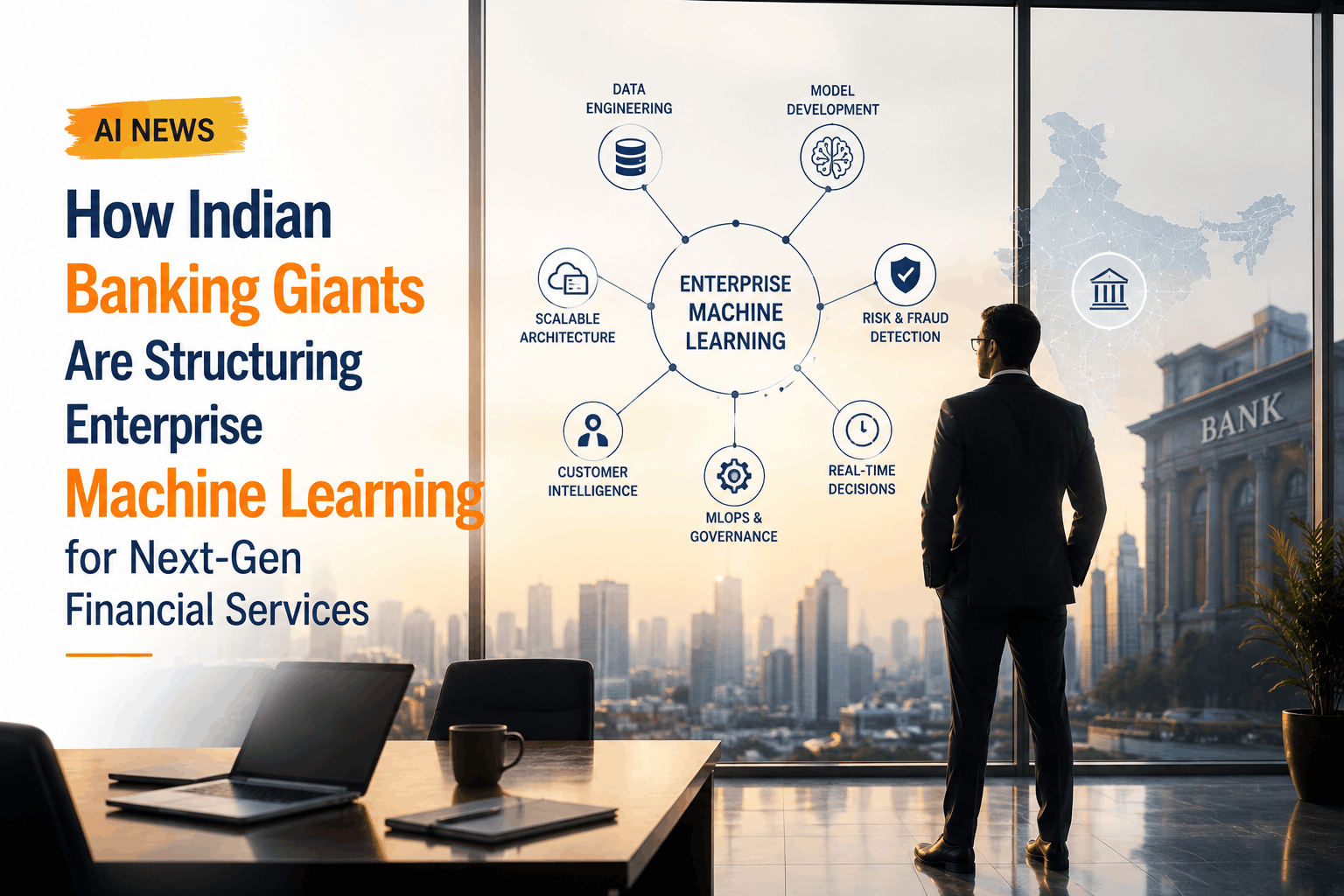
The Indian financial ecosystem is undergoing a profound paradigm shift. Driven by the rapid digitalization of the economy, the explosive growth of the Unified Payments Interface (UPI), and the integration of the India Stack, financial institutions are processing transaction volumes that were unimaginable a decade ago. To manage this scale, maintain security, and optimize operations, India’s leading banks are transitioning from experimental artificial intelligence pilots to robust, enterprise-grade Machine Learning (ML) architectures. This transition marks a new era in AI news, where the focus moves from theoretical capabilities to real-world deployment patterns, regulatory compliance, and system reliability.
The Architectural Transition: Moving Beyond Experimental AI
In the early phases of AI adoption, many financial institutions deployed isolated ML models to handle specific, low-risk tasks such as basic customer segmentation or simple rule-based chatbots. Today, the landscape is radically different. Leading private and public sector banks are restructuring their core data architectures to support continuous, real-time machine learning pipelines.
Modern banking ML architecture requires a seamless flow of data from legacy transactional databases (Core Banking Systems or CBS) to unified data lakes. By leveraging modern data lakehouses, banks can run both batch processing for credit scoring and real-time inference for fraud detection simultaneously. This structural evolution allows banks to leverage unstructured data sources, such as SMS transaction alerts, digital footprints, and utility payment histories, to build highly accurate predictive models.
Key Enterprise Use Cases of Machine Learning in Indian Finance
The deployment of machine learning in Indian banking is highly targeted, focusing on operational efficiency, risk mitigation, and customer acquisition. Below are the primary domains where ML is delivering measurable value.
1. Alternative Credit Scoring and Financial Inclusion
A significant portion of the Indian population lacks a formal credit history, making traditional underwriting methods ineffective. To address this challenge, financial institutions are deploying ML-based underwriting engines. These models analyze alternative data points, including transaction velocity, digital payment patterns, and cash flow histories accessed via the Account Aggregator (AA) network. By analyzing non-traditional data, ML models can assess creditworthiness with high accuracy, enabling banks to safely extend credit to underserved segments.
2. Real-Time Fraud Detection in High-Volume UPI Environments
With billions of transactions flowing through UPI monthly, legacy rule-based fraud detection systems are no longer sufficient. These systems often generate high rates of false positives, disrupting genuine customer transactions. Modern ML models utilize deep learning and anomaly detection algorithms to analyze transaction metadata in real time. The system evaluates parameters such as device fingerprinting, geolocational data, transaction velocity, and historical behavioral patterns within milliseconds, flagging or blocking suspicious transactions before they are settled.
3. Hyper-Personalization and Conversational AI
Customer retention and cross-selling are critical drivers of profitability. Indian banks are utilizing predictive modeling to understand individual customer lifecycles. By analyzing spending habits and life-stage indicators, ML engines dynamically recommend financial products, such as pre-approved personal loans, mutual fund SIPs, or insurance policies. Additionally, conversational AI platforms powered by Natural Language Processing (NLP) are being localized to support multiple Indian regional languages, making digital banking accessible to a broader demographic.
Integrating with the India Stack: Aadhaar, UPI, and Account Aggregators
One of the unique advantages of deploying machine learning in India is the availability of robust public digital infrastructure, collectively known as the India Stack. Indian banks are increasingly integrating their internal ML pipelines with these public APIs to streamline operations.
- eKYC and Video KYC: Computer vision and facial recognition models are deployed during the digital onboarding process. These models verify the authenticity of identity documents (such as Aadhaar and PAN cards) and perform liveness checks to prevent spoofing attacks.
- Account Aggregator Consent Architecture: The Account Aggregator framework allows customers to share their financial data securely across institutions. Banks leverage ML pipelines to ingest this standardized data instantly, enabling automated, paperless loan approvals.
- Consent-Driven Data Pipelines: Because the India Stack is built on explicit user consent, banks are designing their ML models to respect data privacy boundaries, ensuring that data is only utilized for the specific purposes authorized by the customer.
Regulatory Compliance, Data Privacy, and Algorithmic Governance
As financial institutions scale their machine learning systems, regulatory oversight has intensified. The Reserve Bank of India (RBI) maintains strict guidelines regarding risk management, outsourcing, and digital lending practices. Furthermore, the enactment of the Digital Personal Data Protection (DPDP) Act has introduced rigorous standards for user data handling, storage, and processing.
To remain compliant, banks are actively investing in Explainable AI (XAI). Traditional deep learning models often operate as “black boxes,” making it difficult to understand how a specific decision—such as a loan rejection—was reached. XAI frameworks allow data scientists to trace model decisions back to specific input features. This transparency is essential for auditability and ensuring that models do not perpetuate socio-economic biases. Please note that regulatory frameworks, compliance mandates, and implementation standards vary depending on the institution’s classification, asset size, and specific regional guidelines issued by regulatory authorities.
Challenges in Scaling Enterprise ML Deployments
Despite the rapid acceleration of AI technologies, Indian financial institutions face several structural hurdles when deploying machine learning at scale.
- Legacy System Integration: Many established banks operate on legacy core banking platforms that were not designed for real-time data streaming. Integrating modern ML pipelines with these systems requires complex middleware and substantial capital investment.
- Data Silos: Customer data is often fragmented across different departments, such as retail banking, credit cards, wealth management, and insurance. Consolidating this data into a single, clean source of truth is a continuous operational challenge.
- The Talent Deficit: There is intense competition for skilled machine learning engineers and data scientists who also possess a deep understanding of financial domains and regulatory compliance.
- Model Drift: Economic shifts, changing consumer behaviors, and updates to payment infrastructures can cause ML models to lose accuracy over time. Banks must establish robust MLOps (Machine Learning Operations) practices to continuously monitor, validate, and retrain models in production.
Enterprise Deployment Decision Checklist
For financial institutions and fintech enterprises planning to scale their machine learning capabilities, the following checklist serves as an operational roadmap:
- Data Governance: Is there a centralized data catalog and governance framework that aligns with the DPDP Act?
- Infrastructure Scalability: Can the hosting environment (on-premise, private cloud, or hybrid cloud) support real-time inference during peak UPI transaction hours?
- Model Explainability: Are the credit scoring and fraud models equipped with explainability layers to satisfy regulatory audits?
- Security and Compliance: Are data encryption standards maintained both in transit and at rest throughout the ML pipeline?
- Integration Readiness: Are APIs standardized to ingest data seamlessly from the Account Aggregator network and credit bureaus?
Frequently Asked Questions (FAQ)
How does machine learning differ from traditional rule-based banking systems?
Traditional systems rely on static, human-defined rules (e.g., “flag any transaction over a specific amount”). Machine learning systems dynamically analyze thousands of variables simultaneously, identifying complex patterns and anomalies that humans cannot easily define, resulting in fewer false positives and higher accuracy.
How do Indian banks ensure user privacy under the DPDP Act when training ML models?
Banks utilize data anonymization, pseudonymization, and aggregation techniques to train ML models without exposing personally identifiable information (PII). Furthermore, strict consent-management systems ensure that data is only processed for the explicit purposes agreed to by the customer.
Can machine learning eliminate bias in credit underwriting?
While ML can reduce subjective human bias, models can still inherit historical biases present in the training data. To mitigate this, banks implement algorithmic fairness audits, continuous model monitoring, and explainability tools to ensure fair lending practices across all demographics.
What is the role of the Account Aggregator network in financial ML?
The Account Aggregator network acts as a secure, consent-based pipeline that aggregates a customer’s financial data from multiple institutions. This standardized digital data allows bank ML models to instantly assess financial health, credit risk, and asset allocation without requiring physical documentation.
Featured image via Sinar Mas Multiartha — Wikimedia Commons (Public domain).