
 By Recharge Info hub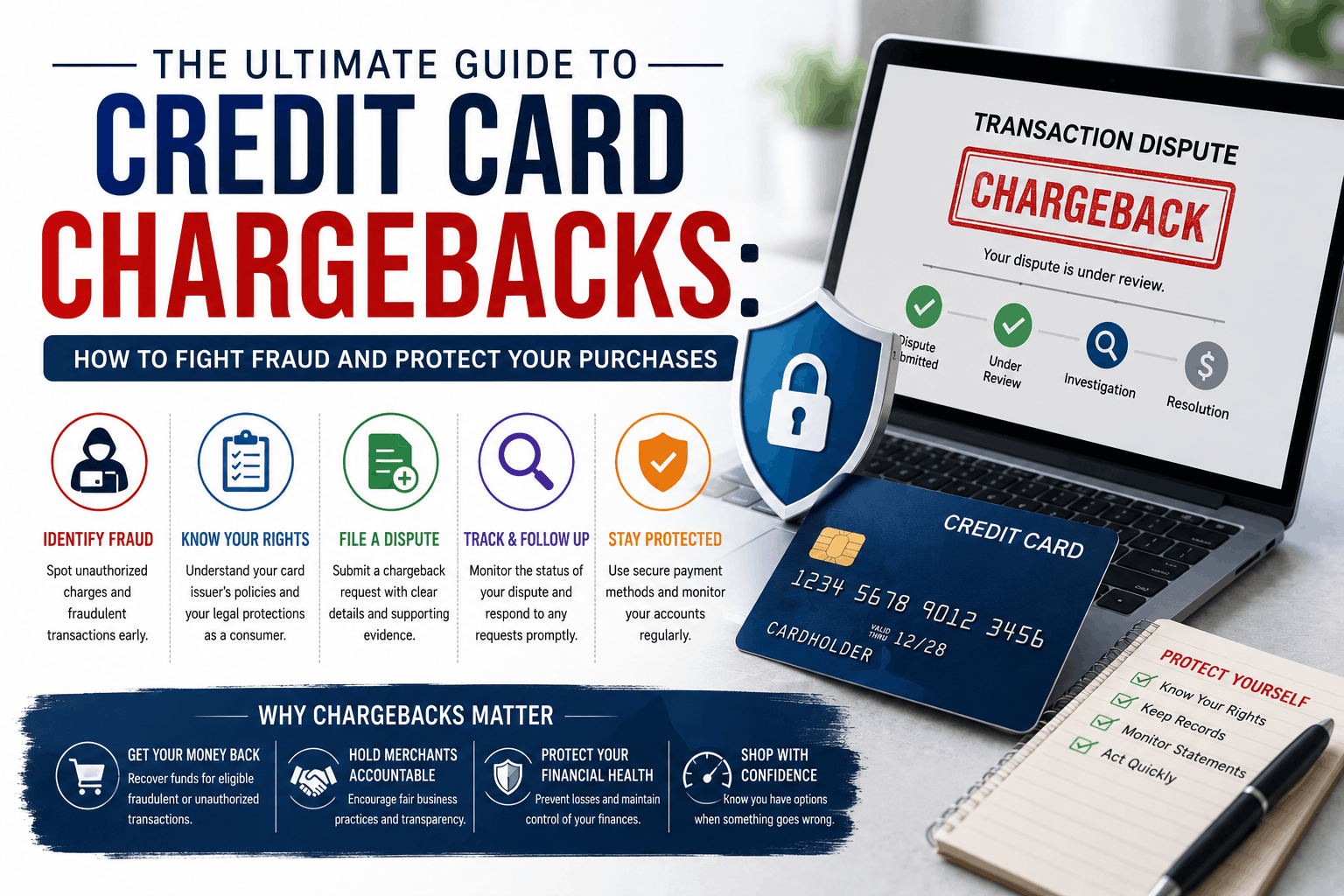
What is a Credit Card Chargeback?
Credit cards are often celebrated for their convenience, reward structures, and introductory offers. However, their most powerful feature is one that consumers hope they never have to use: the chargeback. A chargeback is a consumer protection mechanism that allows cardholders to dispute a transaction and request their credit card issuer to reverse the payment. Unlike a standard refund, which is initiated by the merchant, a chargeback is a forced reversal initiated by the bank that issued your credit card.
Understanding how chargebacks work, when they are appropriate, and how to navigate the dispute process is essential for any cardholder. This guide provides a comprehensive overview of credit card chargebacks, giving you the knowledge needed to protect your hard-earned money and secure your transactions.
Chargebacks vs. Traditional Refunds
It is important to distinguish between a standard refund and a chargeback. A refund is a voluntary agreement between you and the merchant. You return an item or cancel a service, and the merchant credits your account. This is always the preferred first step for any transactional dispute.
A chargeback, by contrast, is an administrative intervention. When you initiate a chargeback, your credit card issuer investigates the claim, withdraws the disputed funds from the merchant’s acquiring bank, and temporarily credits your account. If the dispute is resolved in your favor, that credit becomes permanent. Because chargebacks cost merchants heavy administrative fees and can jeopardize their payment processing privileges, they should be treated as a measure of last resort.
Legal Frameworks and Network Rules
The chargeback system is governed by a combination of consumer protection laws and regulations established by global card networks like Visa, Mastercard, American Express, and Discover. Depending on your location and the specific credit card you hold, different rules and timelines will apply.
The Fair Credit Billing Act (FCBA)
In many jurisdictions, chargeback rights are codified into law. For example, in the United States, the Fair Credit Billing Act (FCBA) establishes strict guidelines for resolving billing errors. Under the FCBA, consumers have the right to dispute unauthorized charges, mathematical errors, and charges for goods or services that were not delivered as agreed. The law requires cardholders to submit their dispute in writing within 60 days of the statement date on which the disputed charge first appeared.
Card Network Guidelines
Even if a transaction falls outside the strict legal protections of local laws, the rules set by the major credit card networks (Visa, Mastercard, American Express) often provide additional layers of protection. These networks maintain detailed dispute resolution manuals that dictate how issuers and merchants must handle chargebacks. These rules cover everything from the specific evidence required to resolve a dispute to the precise timelines that both parties must respect. Generally, card network rules allow for a dispute window of up to 120 days from the transaction date or the expected delivery date, though this can vary by network and country.
Legitimate Grounds for Filing a Chargeback
You cannot file a chargeback simply because you changed your mind about a purchase or regretted a spending decision. Doing so improperly is considered a form of fraud. To successfully win a chargeback dispute, your claim must fall under one of several recognized categories.
1. Unauthorized Transactions and Fraud
If your credit card is lost, stolen, or cloned, and someone else uses it to make purchases, you are protected against these unauthorized charges. Most major credit card issuers offer zero-liability policies for fraudulent transactions, provided you report the unauthorized activity promptly.
2. Non-Delivery of Goods or Services
If you purchase an item online or pay for a service, and the merchant fails to deliver it, you have valid grounds for a chargeback. This also applies to situations where a merchant goes out of business or files for bankruptcy before fulfilling your order.
3. Items Not as Described or Defective
If the goods you receive are significantly different from what was advertised, or if they arrive damaged or defective, you can dispute the charge. However, you must be prepared to prove that the item was not as described and that you attempted to return it or resolve the issue directly with the seller.
4. Billing and Clerical Errors
Clerical mistakes are common in retail transactions. If you are billed twice for the same transaction, charged the wrong amount, or if a cancelled subscription continues to charge your card, you can file a dispute to correct the error.
The Step-by-Step Dispute Process
Filing a chargeback requires a structured approach. Following these steps carefully will maximize your chances of a successful resolution.
Step 1: Attempt to Resolve the Issue with the Merchant
Before contacting your bank, you must make a good-faith effort to resolve the issue directly with the merchant. Credit card issuers will ask for proof of this communication. Save copies of your emails, chat transcripts, and records of phone conversations, noting dates, times, and the names of the customer service representatives you spoke with.
Step 2: Gather Your Evidence
The strength of your chargeback claim depends on the documentation you provide. Before initiating the dispute, compile all relevant evidence, including:
- Original sales receipts and order confirmations
- Shipping and tracking information showing delivery status
- Photographs or professional assessments of damaged or counterfeit goods
- The merchant’s stated return and cancellation policies
- A written timeline of events and your attempts to contact the merchant
Step 3: Initiate the Chargeback with Your Card Issuer
Most credit card issuers allow you to initiate a dispute online through their web portal or mobile application. Alternatively, you can call the customer service number on the back of your card. Clearly state the reason for the dispute and upload or mail your gathered evidence. Be concise, objective, and factual in your description of the issue.
Step 4: The Investigation and Temporary Credit
Once the dispute is filed, your card issuer will review the claim. If they determine that your case has merit, they will issue a temporary credit to your account and send the dispute to the merchant’s acquiring bank. The merchant then has a set period (typically 30 to 45 days) to respond. They can either accept the chargeback or fight it by presenting counter-evidence, a process known as representment.
Step 5: Final Determination
If the merchant does not respond or fails to provide sufficient evidence to counter your claim, the temporary credit becomes permanent, and the dispute is resolved in your favor. If the merchant provides compelling evidence that the charge was valid, the issuer may reverse the temporary credit, and you will be responsible for the balance. If you disagree with this outcome, some networks offer an arbitration phase, though this can sometimes involve additional fees.
The Consequences of ‘Friendly Fraud’
It is critical to use the chargeback process responsibly. Filing a dispute for a transaction that you actually authorized and received is known as “friendly fraud.” This includes disputing a charge because you did not recognize the merchant’s billing name on your statement, or because a family member made a purchase you did not approve of but had access to your card. Abuse of the chargeback system can lead to severe consequences, including the closure of your credit card account, damage to your credit score, and being blacklisted by merchants or payment processors.
Credit Card Dispute Resolution Checklist
Use this quick checklist to determine if you are ready to file a chargeback:
- Have you contacted the merchant? Yes / No (Always attempt direct resolution first)
- Is the transaction within the filing window? Yes / No (Check your issuer’s 60- to 120-day limits)
- Do you have written proof of your claims? Yes / No (Receipts, tracking info, correspondence)
- Is the dispute based on valid grounds? Yes / No (Fraud, non-delivery, clerical error, defective item)
Frequently Asked Questions
Does filing a chargeback hurt my credit score?
No, filing a legitimate credit card dispute or chargeback does not directly impact your credit score. However, if your dispute is denied and you refuse to pay the disputed balance, that unpaid balance can be reported as late, which will harm your credit rating.
Can a merchant ban me after I file a chargeback?
Yes. Merchants incur high chargeback fees and risk losing their merchant accounts if their chargeback ratios are too high. To protect themselves, many online retailers, subscription services, and digital marketplaces will permanently ban or suspend accounts associated with a chargeback.
What should I do if my chargeback is denied?
If your credit card issuer denies your dispute, you can request a detailed explanation of their decision. If you have new, compelling evidence that was not considered, you may be able to appeal the decision. Alternatively, you can seek resolution through consumer protection agencies, small claims court, or arbitration, depending on your local jurisdiction.
Are debit card chargebacks different from credit card chargebacks?
Yes. While debit cards under major payment networks (like Visa or Mastercard) offer similar dispute mechanisms, they do not carry the same robust legal protections as credit cards under statutes like the Fair Credit Billing Act. Furthermore, with a debit card dispute, the money has already left your checking account, whereas a credit card dispute involves the card issuer’s funds, leaving your personal cash intact while the investigation proceeds.
Featured image via Zorya's Leshak — Wikimedia Commons (CC BY-SA 4.0).