
 By Recharge Info hub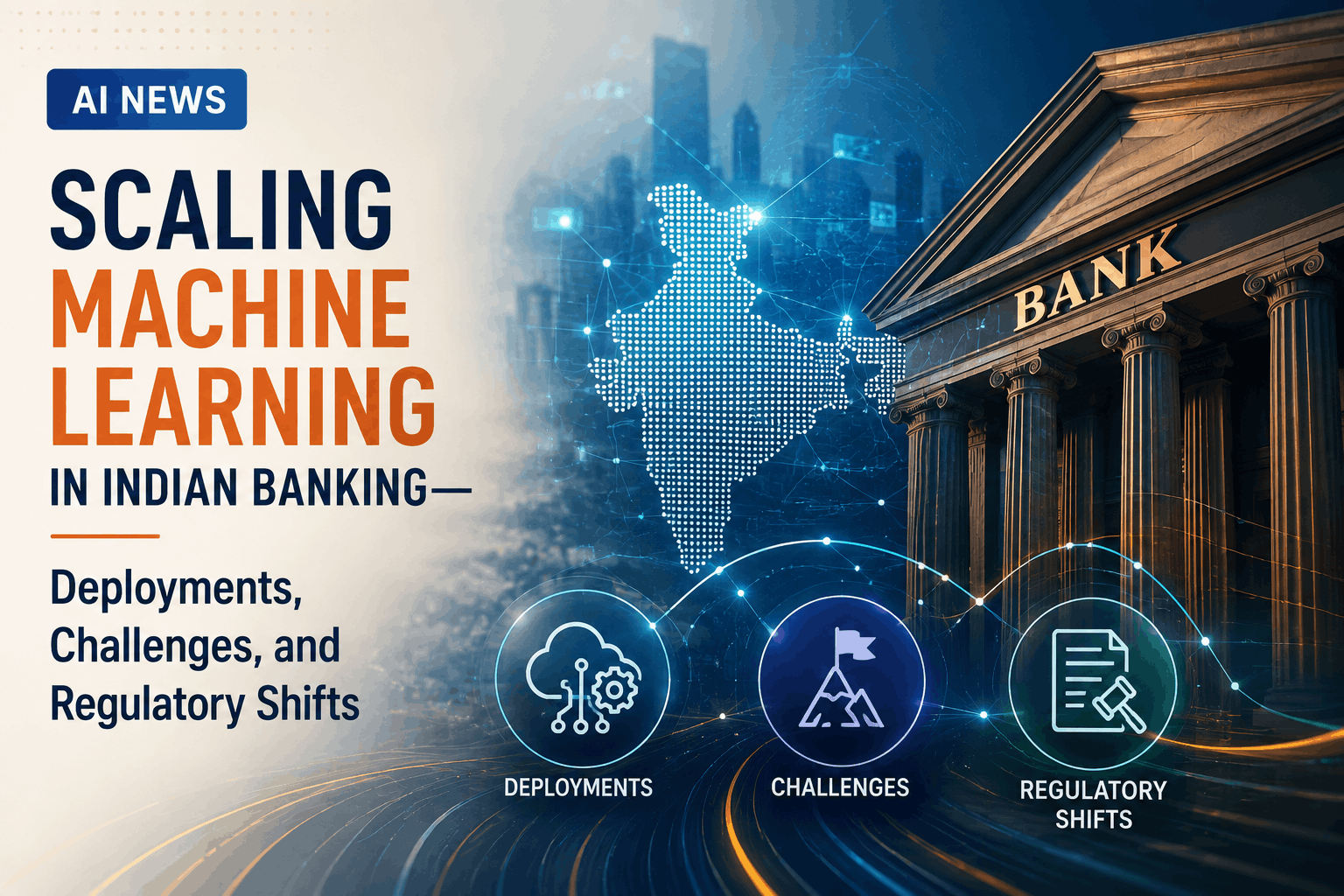
The global financial landscape is undergoing a massive paradigm shift, driven by rapid advancements in artificial intelligence (AI). Among the world’s major economies, India has emerged as a unique frontier for AI implementation in the banking and financial services sector. Powered by robust digital public infrastructure and a massive consumer base, Indian financial institutions are no longer merely experimenting with machine learning (ML); they are deploying enterprise-grade models at an unprecedented scale. From automated credit underwriting to real-time fraud prevention, ML is restructuring how public and private sector banks operate, engage with customers, and manage risks. This deep dive explores the latest news and developments in the deployment of machine learning across India’s banking sector, highlighting the key catalysts, core applications, regulatory frameworks, and future challenges.
The Catalysts Behind India’s Banking AI Boom
To understand the rapid integration of machine learning in Indian banking, one must look at the underlying ecosystem. India has built a world-class digital infrastructure that provides the perfect feeding ground for sophisticated AI models. Unlike many Western counterparts dealing with fragmented legacy systems, Indian banks have the advantage of building on top of unified digital pipelines.
The India Stack and UPI
The Unified Payments Interface (UPI) has democratized digital payments across the subcontinent, generating billions of transaction data points monthly. This high-velocity, high-volume data stream provides machine learning algorithms with the precise transactional data required to train predictive models. AI engines can analyze spending behaviors, velocity of transactions, and merchant categories to construct highly detailed consumer profiles.
The Account Aggregator (AA) Framework
Serving as a financial data consent manager, the Account Aggregator framework allows secure, digital sharing of financial information across institutions. Machine learning models leverage this real-time, verified financial data to assess creditworthiness, drastically reducing the reliance on manual paperwork and physical bank statements. This has paved the way for frictionless loan approvals and customized financial products.
Financial Inclusion Mandates
Government initiatives aimed at bringing the unbanked population into the formal financial fold have pushed banks to adopt AI. Traditional credit scoring methods often fail when evaluating “new-to-credit” (NTC) customers who lack formal credit histories. Machine learning models solve this challenge by analyzing alternative data points, such as utility payments, mobile usage patterns, and transactional behavior, to predict repayment capabilities safely.
Core Areas of Machine Learning Deployment
Indian financial institutions are applying machine learning across various consumer-facing and back-office operations. Here are the primary areas where ML models are actively deployed:
1. Credit Scoring and Alternative Underwriting
Historically, Indian banks relied heavily on credit bureau scores, which excluded a vast portion of the population. Today, leading lenders are deploying predictive machine learning models that analyze thousands of non-traditional variables. These algorithms assess risk profiles with high precision, allowing banks to offer pre-approved micro-loans, instant personal loans, and customized credit cards to previously underserved segments. By automating the underwriting process, decision times have been slashed from days to seconds, allowing banks to expand their loan portfolios without exposing themselves to disproportionate risk.
2. Conversational AI and Vernacular Customer Support
India’s diverse linguistic landscape presents a unique challenge for customer service. To address this, banks are utilizing advanced Natural Language Processing (NLP) and Conversational AI models. These intelligent virtual assistants go beyond basic rule-based chatbots; they are capable of understanding context, sentiment, and multiple Indian regional languages (such as Hindi, Tamil, Telugu, and Bengali), as well as “Hinglish” (a blend of Hindi and English). Customers can check account balances, transfer funds, or block lost cards through voice commands and text messages in their preferred tongue.
3. Fraud Detection and Cybersecurity
As digital transactions skyrocket, so do financial cybercrimes. Traditional rule-based fraud detection systems are no longer sufficient to counter sophisticated attack vectors. Indian banks are deploying deep learning models that analyze transaction patterns in real time. These algorithms establish a baseline of normal user behavior—based on geolocations, transaction times, device fingerprints, and spending habits—and instantly flag anomalies. This proactive approach allows institutions to block fraudulent transactions before they are completed, rather than reacting after the damage is done.
4. Operational Efficiency and Process Automation
Behind the scenes, Intelligent Document Processing (IDP) is streamlining back-office operations. Banks process millions of documents daily, including Know Your Customer (KYC) forms, property papers, and corporate financial statements. Computer vision and optical character recognition (OCR) systems extract data from these documents, verify authenticity against government databases, and flag discrepancies, significantly reducing manual errors and operational costs.
Case Studies: Public vs. Private Sector Initiatives
The deployment strategies of Indian banks vary based on their organizational structures and legacy architectures. Both public and private sector banks are making significant strides, but their operational focus differs.
- Private Sector Pioneers: Institutions like HDFC Bank, ICICI Bank, and Axis Bank have been at the forefront of the digital revolution. They have established dedicated AI centers of excellence to build proprietary machine learning models. Private lenders use ML-driven recommendation engines on their mobile banking apps to deliver hyper-personalized product offers to users, maximizing cross-selling efficiency and customer engagement.
- Public Sector Giants: The State Bank of India (SBI), the nation’s largest public sector lender, has embraced AI at a massive scale. Through its digital platform, YONO (You Only Need One), SBI leverages predictive analytics to offer instant loans and manage agricultural credit risk. By analyzing satellite imagery and soil health data through machine learning, SBI can assess the creditworthiness of farmers and predict crop yields, demonstrating how AI can be customized for unique Indian demographics.
The Regulatory Landscape: RBI’s Balanced Approach
As machine learning becomes deeply integrated into the core banking fabric, the Reserve Bank of India (RBI) has adopted a proactive yet cautious regulatory stance. The central bank’s primary objective is to foster innovation while safeguarding consumer interests and maintaining systemic financial stability.
Model Explainability and the “Black Box” Challenge
One of the primary regulatory concerns is the opaque nature of complex machine learning models, particularly deep neural networks. The RBI emphasizes the need for “explainable AI” (XAI) in critical decision-making processes like credit underwriting. Banks must be able to explain why a loan was rejected, ensuring that algorithms do not perpetuate systemic biases or discriminate based on gender, religion, or geography. Transparency in AI decisioning is becoming a key compliance audit requirement.
Data Privacy and the DPDP Act
The enactment of the Digital Personal Data Protection (DPDP) Act 2023 has significant implications for AI deployments. Banks must ensure that the personal data used to train machine learning models is collected, processed, and stored with explicit, revocable user consent. Data minimization principles must be adhered to, meaning banks can only collect data that is strictly necessary for the specified purpose, preventing unauthorized profiling.
Third-Party Risk Management
Many banks partner with fintech startups and third-party AI vendors to deploy machine learning solutions. The RBI mandates strict oversight of these outsourcing arrangements, holding banks ultimately responsible for data security, model validation, and operational resilience. This ensures that third-party integrations do not introduce security vulnerabilities into the core banking system.
Challenges in Scaling AI in Indian Finance
Despite the rapid progress, several hurdles remain for Indian financial institutions seeking to scale machine learning:
- Legacy Systems and Data Silos: Many older banks, particularly smaller cooperative and public sector banks, operate on fragmented, legacy core-banking systems. Consolidating data from disparate systems into a unified data lake is a highly complex and expensive process. Without clean, centralized data, machine learning models cannot perform optimally.
- The AI Talent Deficit: There is intense global competition for skilled data scientists, machine learning engineers, and AI architects. Indian banks often find themselves competing not just with each other, but also with global tech giants and high-paying fintech startups for top-tier talent.
- Algorithmic Bias and Data Quality: AI models are only as good as the data they are trained on. If historical data contains structural biases, the machine learning model will likely replicate and amplify those biases. Ensuring unbiased, balanced training data is a continuous challenge that requires constant model auditing.
Evaluating AI Readiness: A Checklist for Financial Institutions
For banking executives planning to deploy or scale machine learning initiatives, the following checklist serves as a practical roadmap:
| Focus Area | Key Evaluation Criteria |
|---|---|
| Data Governance | Are data pipelines centralized, cleaned, and compliant with data minimization policies? |
| Regulatory Compliance | Does the model design comply with the DPDP Act 2023 and RBI guidelines on outsourcing and explainability? |
| Model Validation | Are there robust validation protocols to test models for bias, drift, and accuracy before production? |
| Talent Strategy | Is there an internal team capable of monitoring, retraining, and maintaining the ML models post-deployment? |
| Security Infrastructure | Are there adequate cybersecurity measures to protect model endpoints and training data from adversarial attacks? |
Frequently Asked Questions (FAQs)
How does machine learning help people without a credit history get loans in India?
Machine learning models analyze alternative data sources, such as utility bill payments, mobile recharges, transaction histories, and digital footprints, to assess creditworthiness. This allows banks to evaluate risk profiles without relying solely on traditional credit scores, facilitating financial inclusion.
Are Indian banks allowed to use customer data freely for training AI models?
No. Under the Digital Personal Data Protection (DPDP) Act 2023, banks must obtain explicit, informed consent from customers before processing their data. Data must be used strictly for the purpose for which consent was granted, and consumers have the right to withdraw their consent at any time.
How do banks prevent AI models from making biased decisions?
Banks implement “Explainable AI” (XAI) frameworks and conduct regular audits of their training datasets. By monitoring model inputs and outputs, data scientists can identify and mitigate algorithmic biases related to demographics, geography, or socioeconomic factors.
What is the role of the RBI in regulating AI in banking?
The RBI monitors AI deployments to ensure ethical practices, data privacy, consumer protection, and systemic stability. It issues guidelines on outsourcing, risk management, and algorithmic transparency to prevent irresponsible AI usage and safeguard the financial ecosystem.
Will AI completely replace human bank employees in India?
No. While AI automates repetitive tasks, credit scoring, and initial customer queries, human intervention remains crucial for complex financial advisory, regulatory oversight, relationship management, and resolving nuanced customer issues that require emotional intelligence and ethical judgment.
Featured image via Ecole polytechnique / Jérémy Barande — Wikimedia Commons (CC BY-SA 2.0).