
 By Recharge Info hub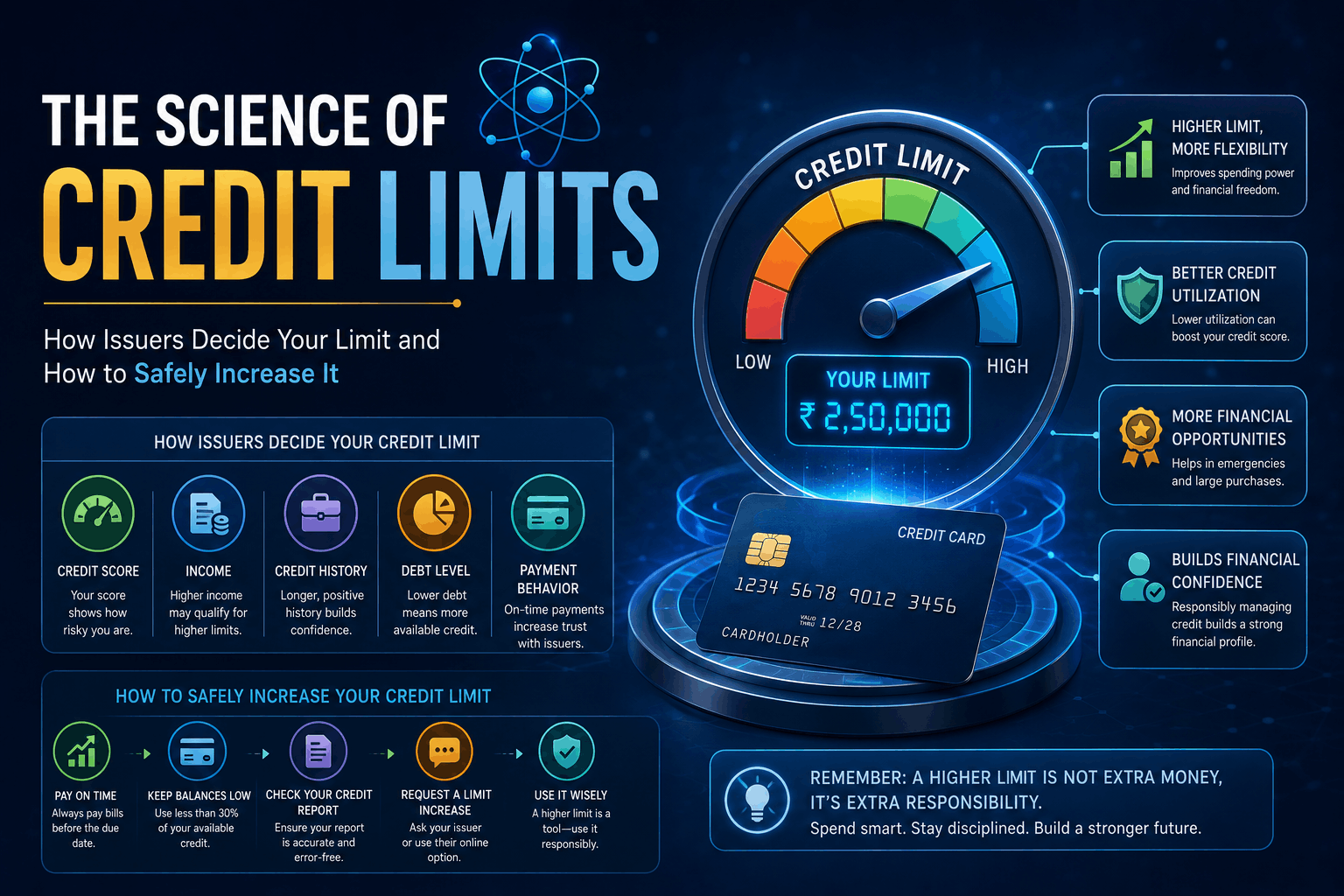
A credit card is far more than a convenient payment method; it is a flexible financial tool that, when managed correctly, can enhance your purchasing power and build your credit profile. At the heart of every credit card account lies a critical metric: the credit limit. This number dictates the maximum balance you can carry at any given time. Understanding how credit card issuers calculate this limit, how it influences your overall financial health, and how to safely request an increase is essential for anyone looking to optimize their personal finances.
How Credit Card Issuers Determine Your Credit Limit
When you apply for a credit card, the issuer does not choose a credit limit at random. Instead, they employ sophisticated underwriting algorithms and risk assessment models to evaluate your creditworthiness. While these proprietary models vary by financial institution, several primary factors universally influence their decision.
1. Debt-to-Income (DTI) Ratio and Verified Income
Your income is the foundation of your repayment capacity. Issuers use your self-reported or verified annual income to determine if you can realistically afford to pay off your charges. However, income alone is not enough. Issuers also calculate your Debt-to-Income (DTI) ratio, which compares your monthly debt obligations (such as rent, mortgage, auto loans, and student loans) to your gross monthly income. A lower DTI ratio signals to the lender that you have sufficient disposable income to manage a higher credit limit safely.
2. Credit Score and Credit History
Your credit score acts as a quick snapshot of your credit risk. A higher score generally correlates with a higher credit limit. Issuers look closely at your payment history, which is the single most important factor in your credit score. A history of consistent, on-time payments indicates reliability, making issuers more comfortable extending larger lines of credit. Conversely, recent late payments, collections, or bankruptcies will severely restrict the credit limit you are offered.
3. Existing Credit Utilization and History with the Issuer
If you already hold credit cards, issuers will examine how you manage those existing lines. They look at your overall credit utilization—the percentage of your total available credit that you are currently using. If you have a history of maintaining low balances across multiple cards, it demonstrates disciplined credit management. Additionally, if you have an established, positive relationship with the specific issuer you are applying to, they may look more favorably upon your application and grant a higher initial limit.
4. Macroeconomic Conditions
Credit limits are also influenced by broader economic factors. During periods of economic growth and low default rates, financial institutions are often more willing to extend generous credit limits. Conversely, during economic downturns or periods of high inflation, issuers may tighten their lending standards, resulting in lower initial credit limits for new applicants and more conservative increases for existing cardholders.
The Crucial Link Between Credit Limits and Credit Scores
Your credit limit plays a direct role in determining your credit score, primarily through its impact on your credit utilization ratio. This ratio is calculated by dividing your total outstanding revolving credit balances by your total available credit limits across all cards.
The 30% Rule of Credit Utilization
Financial experts generally recommend keeping your credit utilization ratio below 30%, though staying below 10% is ideal for achieving the highest credit scores. For example, if you have a total credit limit of $10,000 across all your credit cards, your total outstanding balances should ideally never exceed $3,000 at any point during the billing cycle. If your balances regularly exceed this threshold, credit bureaus may view you as overextended, which can cause your credit score to drop.
How a Higher Limit Improves Your Score
One of the easiest ways to lower your credit utilization ratio—without spending less—is to increase your total available credit. If your balance remains at $2,000 but your credit limit increases from $5,000 to $10,000, your utilization ratio instantly drops from 40% to 20%. This mathematical adjustment can lead to a significant boost in your credit score, provided you do not increase your spending habits to match the new limit.
Strategies to Safely Increase Your Credit Limit
If you have demonstrated responsible financial habits, you may want to seek a higher credit limit. There are several safe methods to achieve this without negatively impacting your credit profile. However, policies vary significantly by card issuer and geographic location, so it is important to understand your specific provider’s rules before proceeding.
1. The Automatic Credit Limit Increase
Many credit card issuers periodically review active accounts to identify customers who qualify for automatic credit limit increases. To trigger an automatic increase, focus on using your card regularly, keeping your utilization low, and paying your statement balance in full and on time every month. Some issuers initiate these reviews every six to twelve months.
2. Requesting an Increase Online or via App
Most major credit card issuers allow cardholders to request a credit limit increase directly through their online portal or mobile application. When submitting a request online, you will typically be asked to update your current annual income, employment status, and housing costs. This method is often quick and can result in an instant decision.
3. Contacting Customer Service
If you prefer a personal touch, or if your online request was not instantly approved, you can call the customer service number on the back of your card. Speaking with a representative allows you to make a direct case for an increase. Be prepared to explain why you deserve a higher limit, highlighting your history of on-time payments, your loyalty to the issuer, or a recent increase in your income.
4. Understanding Hard vs. Soft Credit Inquiries
Before requesting a credit limit increase, it is crucial to ask the issuer whether the request will result in a hard or soft inquiry on your credit report. A soft inquiry does not affect your credit score and is used by issuers to review your report internally. A hard inquiry, however, is a formal check that can temporarily lower your credit score by a few points. If the issuer requires a hard inquiry, consider whether the potential increase is worth the minor, temporary drop in your credit score.
Risks and Pitfalls of High Credit Limits
While a higher credit limit offers numerous financial benefits, it also introduces risks that can jeopardize your financial stability if not managed carefully.
- Lifestyle Inflation and Overspending: The psychological impact of having a higher credit limit can sometimes lead to increased spending. It is vital to remember that a credit limit is not extra money; it is borrowed capital that must be repaid with interest if not settled in full each month.
- Debt Accumulation: If you carry a balance on a card with a high credit limit, you risk accumulating significant high-interest debt that can quickly become unmanageable.
- Impact on Future Borrowing: When you apply for a large loan, such as a mortgage or auto loan, lenders look at your overall exposure to revolving credit. In some cases, having excessively high unused credit limits may make lenders cautious, as you have the potential to suddenly accumulate a large amount of debt.
Decision Checklist: Should You Request a Credit Limit Increase?
Before contacting your issuer, use this decision checklist to determine if you are ready for a credit limit increase:
- Is your payment history spotless? Have you paid your bills on time for at least the last six consecutive months?
- Is your current credit utilization under control? Are you currently keeping your utilization below 30%?
- Has your income recently increased? If you have a higher income, you have a much stronger case for an increase.
- Do you have a clear financial reason? Are you looking to lower your utilization ratio, or are you planning a major, planned purchase that you can immediately afford to pay off?
- Can you resist the temptation to spend more? Are you disciplined enough to treat your credit card the same way you treat cash?
Frequently Asked Questions (FAQ)
Can a credit limit increase hurt my credit score?
If the issuer performs a soft inquiry to evaluate your request, your credit score will not be affected. If they perform a hard inquiry, your score may drop by a few points temporarily. However, the long-term benefit of a lower credit utilization ratio typically outweighs this minor, temporary drop.
How often can I request a credit limit increase?
Most issuers recommend waiting at least six months between credit limit increase requests. Making requests too frequently can signal financial distress to lenders and may result in automatic denials.
Why did my credit card issuer decrease my limit without my permission?
Issuers reserve the right to reduce credit limits at any time. This practice, known as credit slashing, often occurs during economic downturns, if you have a history of late payments, or if you have not used the card for an extended period. Keeping your card active with small, regular purchases can help prevent this.
Does a higher credit limit mean higher interest rates?
No. Your credit limit and your Annual Percentage Rate (APR) are determined independently. Your APR is based on your creditworthiness and the prevailing market rates, while your credit limit is based on your income, debt-to-income ratio, and overall credit capacity.
Featured image via LSDSL, derivative work: Kreuzschnabel — Wikimedia Commons (CC BY-SA 3.0).