
 By Recharge Info hub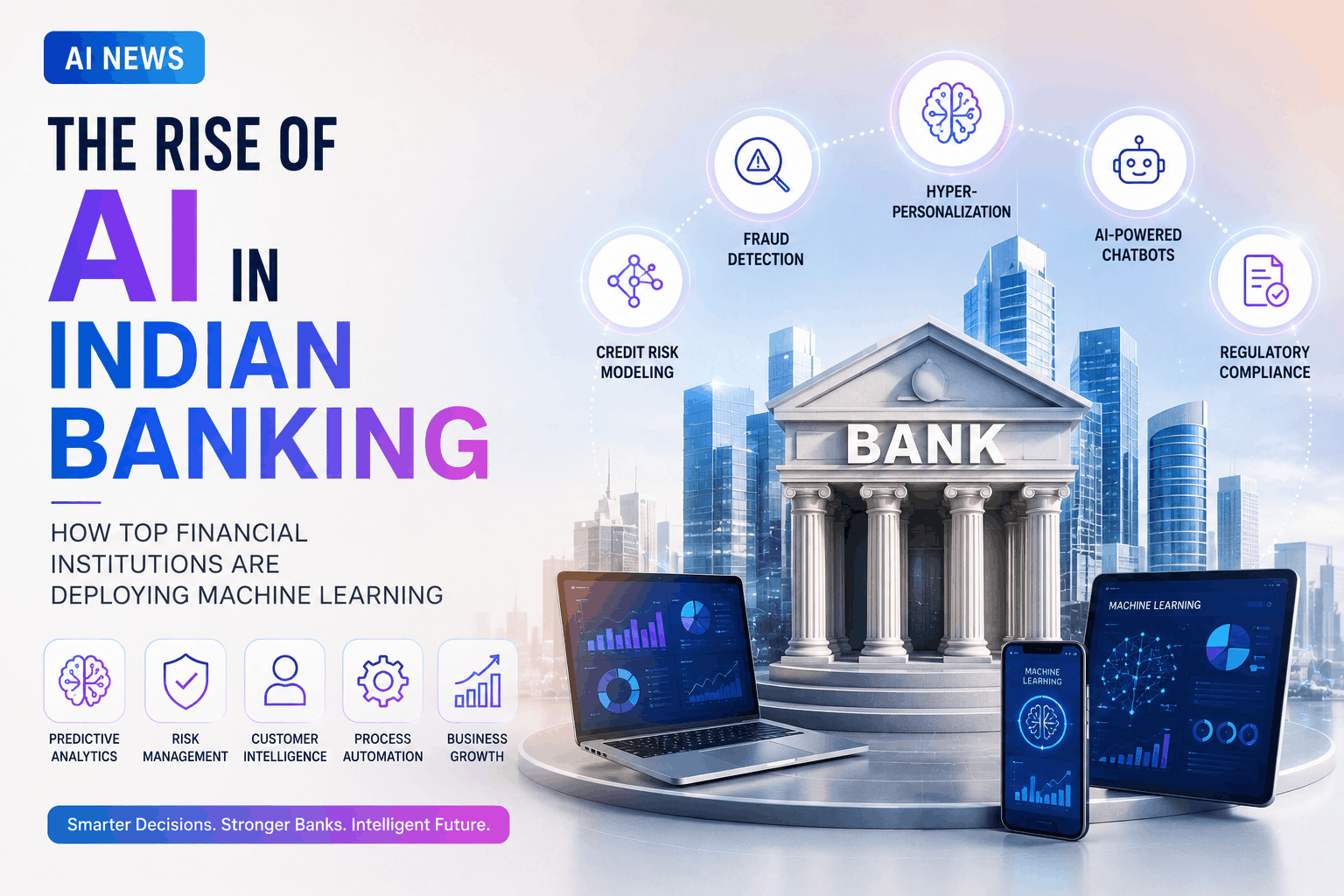
The Indian banking sector has undergone an unprecedented digital transformation over the past decade. Driven by the foundational infrastructure of the India Stack—including Aadhaar, the Unified Payments Interface (UPI), and account aggregator frameworks—the nation has become a global leader in real-time digital payments. Today, a second wave of modernization is sweeping through the industry: the integration of Artificial Intelligence (AI) and Machine Learning (ML). No longer confined to experimental sandboxes, AI and ML are now core components of the operational, risk management, and customer service strategies of India's leading financial institutions.
The Catalyst: Why Indian Banks are Embracing AI/ML Now
The urgency to adopt AI and machine learning in Indian banking is driven by several converging factors. First is the sheer volume of data generated by digital transactions. With billions of UPI transactions occurring monthly, banks have access to vast pools of structured and unstructured data. Traditional legacy systems are simply incapable of processing this scale of information to extract actionable insights.
Second, financial inclusion initiatives, such as the Pradhan Mantri Jan Dhan Yojana, have brought millions of previously unbanked citizens into the formal financial ecosystem. Many of these new customers lack traditional credit histories, requiring banks to develop alternative credit scoring models using machine learning. Finally, rising cybersecurity threats and sophisticated fraud schemes have made real-time, automated threat detection an operational necessity rather than a luxury.
Key Use Cases of Machine Learning in Indian Financial Institutions
1. Credit Underwriting and Alternative Data Scoring
Traditionally, banks relied heavily on credit bureau scores and formal income proofs to assess borrower creditworthiness. This approach excluded a significant portion of the population, including MSMEs (Micro, Small, and Medium Enterprises) and gig economy workers. Today, machine learning algorithms allow banks to analyze alternative data points. These include utility bill payment histories, mobile usage patterns, transaction frequencies, and even social media footprints, when permitted. By training models on historical repayment behaviors across diverse demographics, banks can accurately assess risk and extend credit to underserved segments.
2. Conversational AI and Regional Language Accessibility
In a country as linguistically diverse as India, accessibility is a major barrier to banking services. Conversational AI platforms, powered by Natural Language Processing (NLP), are helping banks bridge this gap. Modern AI chatbots and voice assistants do not just understand English or Hindi; they are increasingly trained in regional languages (such as Tamil, Telugu, Bengali, and Marathi) and local dialects. These virtual assistants handle routine queries, assist with fund transfers, and guide users through complex loan application processes without human intervention.
3. Real-Time Fraud Detection and Prevention
As transaction speeds have accelerated to real-time, fraud detection systems have had to evolve accordingly. Traditional rule-based systems, which flag transactions based on rigid thresholds, often generate high rates of false positives or miss sophisticated cyber-attacks. Machine learning models analyze behavioral biometrics, device fingerprints, geolocation data, and historical spending patterns in milliseconds. If a transaction deviates significantly from a user's established profile, the system can instantly flag it, prompt multi-factor authentication, or temporarily freeze the transaction to prevent loss.
4. Algorithmic Wealth Management and Robo-Advisory
With a growing middle class looking to invest, automated wealth management has gained significant traction. Machine learning models analyze market trends, historical asset performance, macro-economic indicators, and individual risk tolerances to offer personalized investment recommendations. These robo-advisory platforms democratize wealth management, providing retail investors with sophisticated portfolio rebalancing strategies that were previously reserved for high-net-worth individuals.
Case Studies: How Top Indian Banks Deploy AI
State Bank of India (SBI)
As the country's largest public sector lender, SBI has leveraged AI to manage its massive customer base and mitigate risks. Through its flagship digital banking platform, YONO (You Only Need One), SBI utilizes predictive analytics to offer pre-approved personal loans to eligible customers instantly. Furthermore, SBI employs machine learning models to monitor its asset quality, identifying early warning signs of potential default among retail and corporate borrowers to manage Non-Performing Assets (NPAs) proactively.
HDFC Bank
HDFC Bank has been a pioneer in deploying conversational AI. Its virtual assistant, EVA (Electronic Virtual Assistant), has handled millions of customer queries with high accuracy rates. On the backend, HDFC uses machine learning algorithms to personalize product offerings. By analyzing a customer's transaction history and life stage, the bank can recommend tailored financial products—such as car loans, insurance policies, or mutual funds—at the precise moment the customer is most likely to need them.
ICICI Bank
ICICI Bank has integrated cognitive robotic process automation (RPA) across various business functions. The bank uses AI-powered optical character recognition (OCR) and natural language processing to automate back-office operations, such as processing trade documents, verifying KYC (Know Your Customer) details, and reconciling accounts. This has drastically reduced transaction processing times and minimized human error in high-volume tasks.
Axis Bank
Axis Bank has focused heavily on conversational banking and cloud-native AI capabilities. Its AI-enabled conversational voice bot, AXAA, manages customer service requests over the phone, resolving queries with human-like comprehension. Additionally, Axis Bank utilizes machine learning to optimize its debt collection processes, using predictive models to segment customers based on their likelihood to pay and determining the most effective communication channels and times for outreach.
Challenges in the AI Banking Journey
Despite the rapid pace of adoption, Indian banks face several hurdles in fully realizing the potential of artificial intelligence:
- Data Privacy and Regulatory Compliance: The enactment of the Digital Personal Data Protection (DPDP) Act of 2023 has placed strict responsibilities on banks regarding how they collect, store, and process customer data. Ensuring AI models comply with consent mechanisms and data minimization principles is a continuous challenge.
- Legacy Integration: Many established banks operate on complex, decades-old core banking systems. Integrating modern, real-time AI engines with legacy infrastructure requires substantial capital investment and technical expertise.
- The 'Black Box' Problem: Deep learning models are highly accurate but often lack explainability. For critical decisions like loan rejections, regulatory bodies require banks to explain the exact reasoning behind a decision, making interpretable AI models a necessity.
- Talent Deficit: There is intense competition for high-caliber data scientists, machine learning engineers, and cybersecurity experts who understand both advanced computing and complex banking regulations.
The Regulatory Framework and Ethical AI
The Reserve Bank of India (RBI) maintains a proactive yet cautious stance on the adoption of AI in financial services. The central bank emphasizes the importance of robust governance frameworks, ethical AI practices, and effective risk management. Financial institutions are expected to ensure that their AI models are free from bias, undergo regular validation audits, and maintain human oversight—often referred to as a 'human-in-the-loop' approach. Because guidelines, compliance mandates, and technological requirements vary by institution and location, banks must design flexible AI architectures that can adapt to evolving regulatory landscapes.
Evaluating AI Readiness in Banking: An Institutional Checklist
For financial institutions and fintech partners assessing their AI maturity, the following checklist highlights critical focus areas:
- Data Governance: Is there a centralized, clean data repository with robust metadata management and strict access controls?
- Model Explainability: Can the credit scoring and risk assessment models provide clear, auditable explanations for automated decisions?
- Regulatory Alignment: Do the AI systems fully comply with the DPDP Act 2023 and the latest RBI guidelines on IT governance?
- Infrastructure Scalability: Is the underlying cloud or hybrid infrastructure capable of handling real-time, low-latency AI inference at scale?
- Ethical Auditing: Are there active mechanisms to test algorithms for demographic, gender, or socio-economic bias?
Frequently Asked Questions
How does AI help in detecting UPI transaction frauds?
AI models analyze transaction metadata—such as device IDs, IP addresses, transaction amounts, velocity, and typing biometrics—in real-time. If a transaction appears highly anomalous compared to the user's historical baseline, the system flags it for verification before the funds leave the account.
Does the use of AI in credit scoring disadvantage rural borrowers?
On the contrary, AI can facilitate financial inclusion. By looking at non-traditional data—like mobile recharges, crop cycles, and micro-transaction histories—machine learning models can build reliable risk profiles for individuals who do not possess traditional credit histories or formal salary slips.
What is the impact of the DPDP Act 2023 on AI deployment in Indian banks?
The Digital Personal Data Protection Act requires banks to obtain explicit, revocable consent from customers before using their data to train AI models or personalize services. It mandates strict data security practices and penalizes unauthorized data processing, forcing banks to implement privacy-preserving AI techniques.
Are human bank employees being replaced by AI?
While AI automates routine, repetitive tasks such as basic customer queries and document verification, it is primarily designed to augment human capabilities. Human employees are redirected to complex problem-solving, relationship management, and strategic decision-making roles that require empathy and contextual judgment.
Disclaimer: Implementation frameworks, integration costs, and regulatory compliance standards for AI technologies vary depending on the specific financial institution, business model, and jurisdictional guidelines. Readers should consult official regulatory circulars from the Reserve Bank of India (RBI) and legal advisories regarding the DPDP Act for actionable compliance strategies.
Featured image via Ecole polytechnique / Jérémy Barande — Wikimedia Commons (CC BY-SA 2.0).